
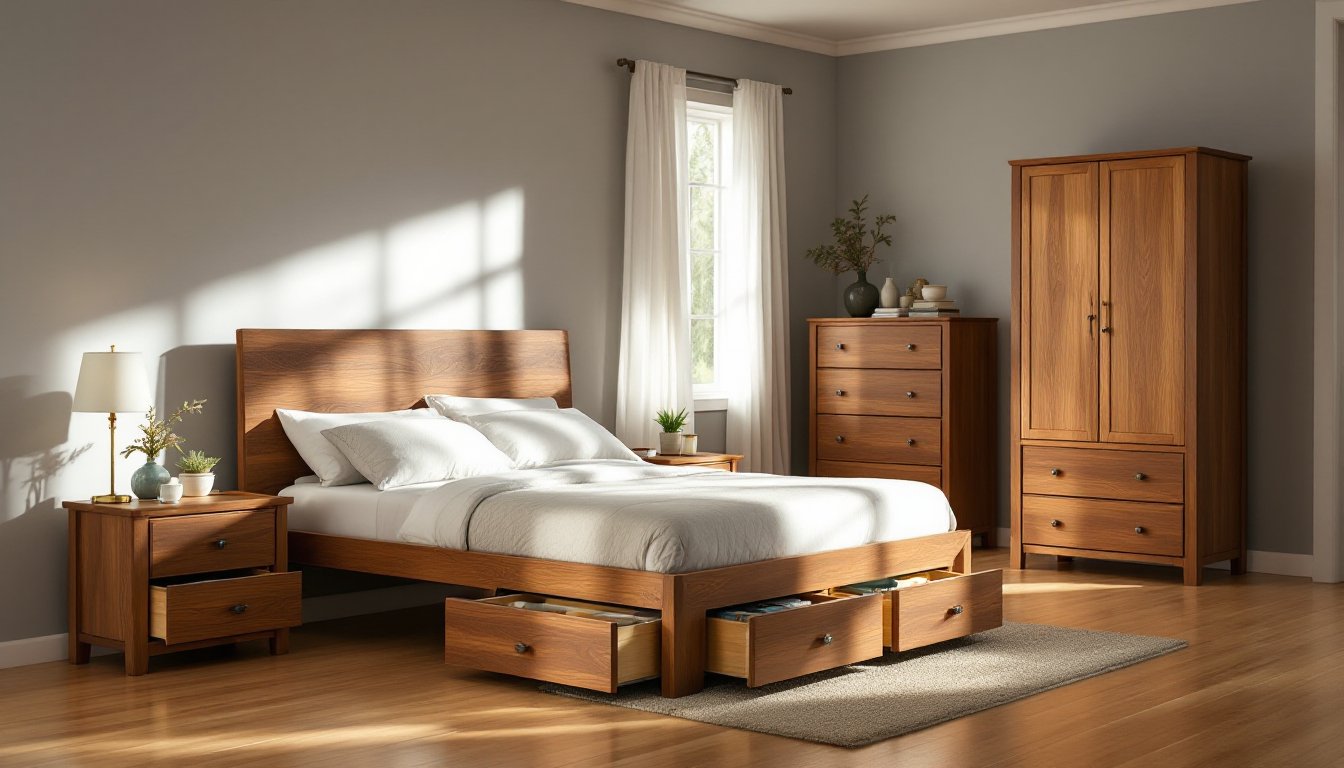
Walking into a bedroom furnished with solid hardwood pieces feels different. There’s weight, substance, and a sense of permanence that particleboard and laminate can’t replicate. Whether someone’s upgrading from college-era furniture or replacing worn-out pieces, solid hardwood represents a step up in quality that pays off over decades. Unlike furniture built from composites or veneers that show wear within a few years, real hardwood stands up to daily use, refinishing, and even moves across the country. It’s not the cheapest option at the outset, but the math changes when a dresser outlasts three cheaper replacements. This guide walks through what makes solid hardwood worth the investment, how to choose the right species and style, and what it takes to keep those pieces looking sharp for the long haul.
Table of Contents
ToggleKey Takeaways
- Solid hardwood bedroom furniture lasts 50+ years with basic care, while veneer and particleboard pieces typically fail within 5–10 years, making it a superior long-term investment despite higher upfront costs.
- Oak, maple, cherry, and walnut are the top hardwood species for bedroom furniture, each offering distinct durability ratings, grain patterns, and aesthetic qualities suited to different design styles.
- Solid hardwood can be refinished multiple times to remove scratches and wear, while veneer and engineered alternatives cannot be sanded or repaired, preserving value and extending lifespan.
- Proper humidity control (30–50% relative humidity), regular dusting with soft cloths, and immediate spill cleanup protect hardwood finishes and prevent wood movement that loosens joints.
- Quality construction details like dovetail joints on drawers, mortise-and-tenon bed frame connections, and solid wood construction distinguish heirloom hardwood furniture from disposable pieces.
Why Solid Hardwood Is the Best Investment for Your Bedroom
Solid hardwood furniture starts with boards milled from a single piece of wood, no veneers glued over particleboard cores, no engineered substrates. That construction method delivers structural integrity that holds up under stress. Drawer boxes don’t sag, bed frames don’t creak after a year, and joints stay tight through humidity swings.
The longevity alone justifies the upfront cost. A well-built hardwood dresser can last 50+ years with basic care, while a veneer-over-MDF unit typically shows edge chipping, veneer peeling, and drawer failure within 5–10 years. Hardwood also tolerates refinishing. Surface scratches, water rings, and finish wear can be sanded out and re-stained, something impossible with veneer or laminate.
From a resale perspective, solid hardwood holds value. Mid-century modern walnut pieces and vintage oak bedroom sets command strong prices in secondhand markets, while particle-based furniture ends up curbside. Weight is a practical indicator: hardwood is heavy. A solid maple nightstand will weigh significantly more than a hollow-core equivalent, and that density translates to stability and durability.
Environmental impact varies by sourcing, but hardwood furniture made from responsibly harvested timber (look for FSC certification) offers a renewable, biodegradable option compared to petroleum-based composites. Over a lifetime, one hardwood bed frame produces less waste than multiple replacements of cheaper alternatives.
Top Wood Species for Bedroom Furniture and Their Unique Characteristics
Not all hardwoods perform the same. Species vary in density, grain pattern, color, and workability, which affects both aesthetics and durability. The right choice depends on style preferences, budget, and how much character someone wants in the grain.
Oak: Classic Durability and Grain Patterns
Red oak and white oak dominate the hardwood furniture market for good reasons. Both species rank high on the Janka hardness scale (red oak at 1,290 lbf, white oak at 1,360 lbf), meaning they resist dents and scratches better than softer woods. Red oak shows a warm, pinkish tone with prominent grain patterns, those cathedral arches and ray flecks that give traditional furniture its character. White oak leans cooler and grayer, with tighter grain and better moisture resistance due to its closed cell structure.
Oak takes stain well, which makes it versatile for finishes ranging from natural clear coats to dark espresso. It’s also widely available and typically priced lower than premium species. Quarter-sawn oak, cut perpendicular to the growth rings, reveals dramatic ray fleck patterns prized in Mission and Arts & Crafts furniture. Many woodworking project plans feature oak due to its availability and forgiving nature for DIY builders.
Maple, Cherry, and Walnut: Premium Hardwood Options
Hard maple (also called sugar maple or rock maple) is the densest common furniture wood, rating 1,450 lbf on the Janka scale. It features a tight, uniform grain with minimal figure in plain-sawn boards, though figured varieties like birdseye and curly maple command premium prices. Maple’s pale, creamy color works well for contemporary and Scandinavian styles, and it accepts paint cleanly. The downside: maple can be blotchy when stained, so gel stains or clear finishes work best.
Cherry starts as a light pinkish-tan and darkens to a rich reddish-brown over years of UV exposure. That aging process is part of its appeal. The grain is fine and smooth, with occasional curl or figure. Cherry is moderately hard (995 lbf), easy to work, and finishes beautifully with oil or lacquer. It’s a top choice for traditional and transitional bedroom sets.
Black walnut delivers dark chocolate tones with straight to wavy grain and occasional burls. It’s prized for high-end furniture and mid-century modern designs that emphasize natural wood tones. Walnut is moderately hard (1,010 lbf), machines cleanly, and develops a lustrous finish. Because it’s less common and slower-growing than oak or maple, walnut furniture commands higher prices. For those exploring contemporary furniture aesthetics, walnut’s natural richness pairs well with minimalist forms.
How to Choose Solid Hardwood Bedroom Furniture That Matches Your Style
Style compatibility comes down to wood species, finish, joinery, and hardware. Mission-style furniture favors quarter-sawn white oak with medium-to-dark stains and simple, rectilinear lines. Shaker designs lean on maple or cherry with natural or light finishes, emphasizing clean proportions and tapered legs. Mid-century modern pieces typically use walnut or teak with oil finishes and tapered, angled legs.
Finish impacts both appearance and maintenance. Oil finishes (tung oil, Danish oil) penetrate the wood, highlighting grain and providing a matte, natural look. They’re easy to spot-repair but offer less surface protection than film finishes. Polyurethane and lacquer create a durable surface layer that resists moisture and scratches, though they can look more plastic if applied heavily. Water-based poly dries clear and doesn’t amber over time, while oil-based versions add warmth.
Joinery quality separates heirloom furniture from disposable pieces. Look for dovetail joints on drawer boxes, those interlocking fingers provide mechanical strength without relying solely on glue. Mortise-and-tenon joints on bed frames and case goods offer superior rigidity compared to dowels or screws. Drawer boxes should be solid wood (not stapled plywood), with smooth-running slides rated for at least 75 lbs.
Hardware and proportions matter. Undersized nightstands next to a king bed look awkward: dressers should be scaled to the room. Metal drawer pulls and knobs can be swapped to update style without refinishing, so focus on the furniture’s bones rather than the current hardware. Many builders following DIY furniture plans discover that hardware upgrades transform basic builds into custom pieces.
Finally, check for solid construction details: full-extension drawer slides, dust panels between drawers (keeps contents clean and adds rigidity), and adjustable leveling feet or substantial bases that won’t wobble on uneven floors.
Caring for and Maintaining Your Hardwood Bedroom Pieces
Hardwood furniture isn’t fragile, but a few habits extend its life and appearance. Dust regularly with a microfiber cloth or soft brush attachment, grit acts like sandpaper when rubbed across finishes. For cleaning, use a slightly damp (not wet) cloth with a drop of mild dish soap if needed. Avoid spray polishes containing silicone, which build up over time and complicate future refinishing.
Control humidity to prevent wood movement. Hardwood expands and contracts with seasonal moisture changes, which is normal, but extreme swings cause joints to loosen and panels to crack. Aim for 30–50% relative humidity year-round. In dry winter months, a humidifier helps: in muggy summers, a dehumidifier or AC keeps levels stable. Solid wood panels on dressers and bed headboards are designed to float in frames, allowing movement without splitting.
Protect surfaces from heat and moisture. Use coasters, placemats, or felt pads under lamps and decor. Water rings form when moisture penetrates the finish, wipe spills immediately. For existing water marks on lacquer or poly finishes, try rubbing with a paste of baking soda and water, or use 0000 steel wool with mineral spirits (test in an inconspicuous spot first).
Refinishing is straightforward when needed. Light scratches often buff out with furniture polish or paste wax. Deeper damage requires sanding. Strip old finish with chemical stripper or by sanding through grits (80, 120, 180, 220), following the grain. Apply new stain if desired, then topcoat with poly, lacquer, or oil. Always wear a respirator when working with strippers or solvent-based finishes, and ensure adequate ventilation.
For pieces with oil finishes, reapply oil annually or when the wood looks dry. Wipe on a thin coat, let it soak for 15–20 minutes, then buff off excess. It’s a 20-minute task that keeps the finish fresh and the wood nourished.
Solid Hardwood vs. Veneer and Engineered Wood: What You Need to Know
Understanding construction types prevents buyer’s remorse. Solid hardwood furniture is milled from solid boards throughout. Tops, sides, drawer fronts, and frames are all real wood. It’s the heaviest, most expensive, and longest-lasting option.
Veneer uses a thin slice of real hardwood (typically 1/32″ to 1/16″ thick) glued over a substrate, usually plywood, MDF, or particleboard. Quality veneer furniture can be beautiful and stable, especially when built over plywood cores. It’s lighter and less prone to warping than solid wood panels, and it allows bookmatched grain patterns impossible with solid construction. The catch: veneer can’t be sanded deeply. Once you sand through that thin layer, you hit substrate. Edge banding also peels over time, especially on cheaper pieces.
Engineered wood and composite materials (MDF, particleboard, chipboard) are wood fibers or particles bonded with resin. They’re dimensionally stable and inexpensive but lack structural strength and moisture resistance. Screws don’t hold well in particleboard, drawer slides pull out, hinges loosen. Water damage causes irreversible swelling and crumbling.
When evaluating furniture, check edges and joints. Solid wood shows end grain at edges. Veneer pieces show a thin cap or edge banding. Lift a drawer: solid wood drawers are heavy and show grain on all surfaces. Particleboard drawers feel light and often have printed grain patterns.
Price reflects construction. A solid oak dresser typically starts around $800–$1,500 (depending on size and finish), while veneer-over-plywood runs $500–$1,000, and particleboard composites bottom out at $200–$400. Lifetime cost, but, favors solid hardwood when replacement cycles are factored in.
For bedroom furniture specifically, pieces that see daily use and hold sentimental value, solid hardwood or high-quality veneer over plywood cores are the smart picks. Skip particleboard for anything expected to last more than a few years. If budget is tight, buy fewer solid pieces and add more over time rather than filling a room with furniture destined for the landfill.