
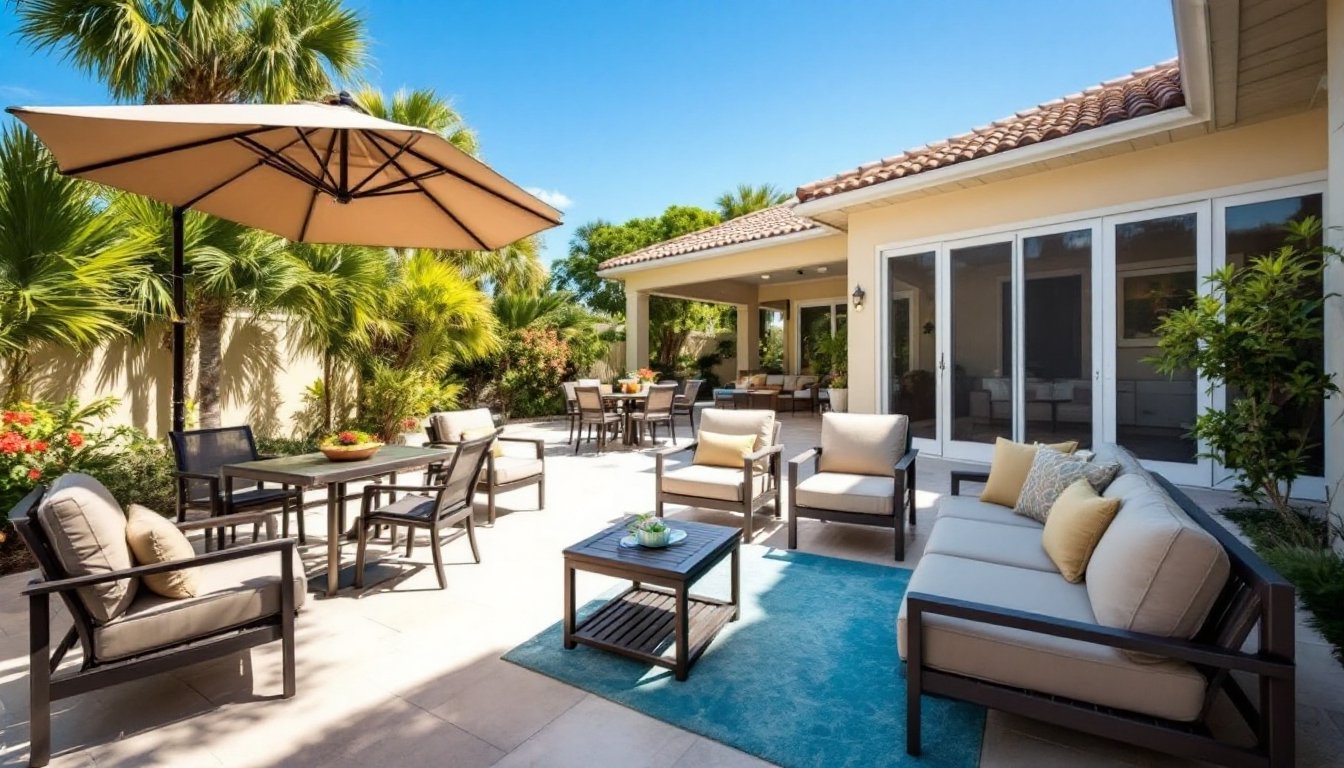
Jacksonville homeowners face a unique challenge when furnishing outdoor spaces. With nearly 300 days of sunshine annually, high humidity that hovers around 75% year-round, and proximity to saltwater for many neighborhoods, the wrong patio furniture can deteriorate within a single season. Unlike homeowners in drier climates who can choose based purely on aesthetics, Jacksonville residents need to prioritize durability and weather resistance without sacrificing style. This guide walks through material selection, local buying options, and maintenance practices specific to Northeast Florida’s coastal environment.
Table of Contents
ToggleKey Takeaways
- Jacksonville’s high humidity, intense UV exposure, salt air, and afternoon thunderstorms demand patio furniture engineered specifically for coastal and tropical climates to avoid deterioration within one season.
- Marine-grade polymer (HDPE), powder-coated aluminum with welded construction, and solution-dyed acrylic fabrics like Sunbrella offer the best durability for patio furniture in Jacksonville’s environment, while untreated wrought iron, rattan, and budget steel frames should be avoided.
- Monthly hosing, quarterly deep cleaning with oxygen bleach, immediate touch-ups on scratched coatings, and proper hurricane preparation are essential maintenance practices that significantly extend patio furniture lifespan in Northeast Florida.
- Mid-range patio furniture sets ($1,200–$3,000) provide the best value in Jacksonville, balancing quality materials and reasonable pricing for 7–10 years of use with proper maintenance.
- Invest premium dollars in primary seating areas and coastal properties within 5 miles of saltwater, but consider budget options for secondary spaces like screened porches where weather exposure is minimal.
- A smart cost-management strategy is buying premium frames and replacing budget cushions every 3–4 years, which spreads expenses while maintaining the furniture’s structural integrity over time.
Why Jacksonville’s Climate Makes Patio Furniture Selection Critical
Jacksonville sits in USDA Hardiness Zone 9a, which means mild winters but brutal summers. The real challenge isn’t temperature, it’s the combination of factors that accelerate furniture degradation.
Humidity and UV exposure create a one-two punch. Summer temperatures regularly hit 92°F with humidity levels that keep materials damp enough to promote mold, mildew, and rust. At the same time, intense UV radiation breaks down protective coatings and fades fabrics faster than in northern states.
Salt air affects anyone within 10-15 miles of the coast, which includes most of Jacksonville proper, the Beaches communities, and Riverside. Salt accelerates corrosion on metal hardware and can pit aluminum frames if they lack proper anodization or powder coating.
Afternoon thunderstorms from June through September dump heavy rain with little warning. Furniture needs to either drain quickly or be light enough to move under cover. Pieces with flat surfaces or cushions that trap water will develop mildew within days during rainy season.
These conditions mean the $299 resin wicker set that works fine in Atlanta might last two seasons here before cracking and fading. Jacksonville requires materials engineered for marine-grade or tropical climates.
Top Materials for Patio Furniture in Jacksonville’s Coastal Environment
Material choice determines whether patio furniture becomes a long-term investment or a recurring expense. Here’s what holds up in Northeast Florida’s conditions.
Weather-Resistant Options That Last
Marine-grade polymer and high-density polyethylene (HDPE) top the durability list. This plastic lumber, commonly sold under brand names like POLYWOOD, contains UV stabilizers throughout the material rather than just as a surface coating. It won’t crack, splinter, or need refinishing. Expect to pay $400-$800 for a quality HDPE Adirondack chair, but it’ll outlast wood or metal alternatives by years.
Powder-coated aluminum offers the best balance of weight and weather resistance for metal frames. Look for welded construction rather than bolted joints, which can corrode. The powder coating must be applied over a proper primer, cheap aluminum furniture skips this step and shows rust bleed-through within months. Premium brands like Tropitone or Brown Jordan use multi-stage finishing that adds 30-50% to the cost but extends lifespan proportionally.
Teak and eucalyptus work if properly maintained. Teak contains natural oils that resist moisture and insects, but those oils fade to silver-gray without regular treatment with teak oil (every 3-4 months in Jacksonville’s climate). Eucalyptus costs less but requires the same maintenance schedule. Both need annual cleaning with a deck cleaner to remove mildew.
Avoid these materials in Jacksonville: Untreated wrought iron (rusts within one season near the coast), rattan or natural wicker (moisture causes warping), and budget steel frames with spray-paint finishes (corrosion starts at joints and welds).
Fabric matters as much as frames. Solution-dyed acrylic like Sunbrella resists fading and mildew far better than polyester. The color goes through the entire fiber rather than being applied as a surface dye. Cushions need quick-drain foam cores, solid foam holds water and grows mold. Many Jacksonville homeowners following advice from design and outdoor living experts choose removable cushion covers they can machine-wash monthly during summer.
Best Places to Buy Patio Furniture in Jacksonville
Jacksonville offers both national chains and local specialists. Each has advantages depending on budget and timeline.
Local outdoor furniture specialists like The Patio Place (San Jose Boulevard) and Casual Designs Furniture (multiple locations) stock brands engineered for Florida’s climate. Staff can explain warranty details and maintenance requirements specific to coastal conditions. Expect 15-25% higher prices than big-box stores, but selection focuses on proven materials. Delivery and assembly typically run $150-$300 depending on order size.
National chains (Lowe’s, Home Depot, Target) carry budget-friendly options in the $200-$600 range for complete seating sets. Quality varies significantly, inspect welds on metal frames and check that cushion covers have zippers for removal. These stores work well for homeowners planning to replace furniture every 3-5 years rather than seeking 10+ year investments.
Ashley HomeStore and Rooms To Go stock mid-range collections ($800-$2,500 for dining sets) with better construction than big-box options but less specialization than dedicated outdoor retailers. Both offer financing and frequent sales around Memorial Day, Fourth of July, and Labor Day.
Online ordering through Wayfair, Overstock, or direct from manufacturers saves 20-30% but requires careful attention to specifications. Read dimensions carefully, many homeowners misjudge scale and receive furniture too large or small for their space. Assembly quality depends on clear instructions and your comfort with tools. Budget 2-4 hours for a typical dining set.
For those interested in exploring coordinated outdoor furniture designs, several retailers offer complimentary design consultations either in-store or virtually.
How to Choose the Right Patio Furniture for Your Jacksonville Home
Start by measuring the actual usable space, not just the patio dimensions. Allow 24-36 inches of clearance around tables and chairs for comfortable movement. A 10×12-foot patio realistically fits a bistro set or small loveseat, not a six-person dining table.
Assess sun exposure throughout the day. South and west-facing patios in Jacksonville receive brutal afternoon sun from May through September. Dark-colored cushions on these exposures will be too hot to sit on from 2-7 PM without shade. Consider lighter colors or invest in a pergola or shade sail before buying furniture.
Match furniture weight to your storage situation. Homeowners with covered lanais or screened porches can use heavier pieces. Those with open patios need to either accept weathering or choose lightweight aluminum and HDPE furniture that one person can move to a garage or shed before hurricanes. A solid teak dining table can weigh 150+ pounds, beautiful but immobile.
Think about your actual usage patterns. Many Jacksonville homeowners buy large dining sets but actually use the space for morning coffee or evening cocktails, not meals. A quality conversation set with side tables might see more use than a formal dining setup.
Consider modular sectionals rather than fixed sofas. They adapt to different configurations and can expand if you move to a larger home. Brands like Harmonia Living and Sunset West offer pieces that connect via hidden brackets.
Maintenance Tips for Jacksonville Patio Furniture
Regular maintenance extends furniture life significantly in Jacksonville’s harsh conditions. Skip it, and even premium materials deteriorate prematurely.
Monthly tasks (during use season, April-October):
- Hose down all furniture to remove salt residue, pollen, and dirt
- Wash cushion covers in cold water with mild detergent
- Inspect aluminum and steel frames for coating chips or scratches: touch up immediately with matching powder-coat repair paint
- Wipe down glass tabletops with vinegar solution to prevent hard water spotting
Quarterly deep cleaning:
- Scrub teak or eucalyptus with oxygen bleach cleaner (not chlorine bleach, which damages wood fibers)
- Apply teak oil or sealer within 24 hours of cleaning while wood is still dry
- Remove and clean umbrella fabric: check crank mechanisms for smooth operation
- Lubricate any moving parts (recliner mechanisms, swivel bases) with silicone spray
Hurricane prep is non-negotiable. Jacksonville falls within the coastal evacuation zone, and even tropical storms produce winds that turn patio furniture into projectiles. Lighter pieces go in the garage. Heavier items should be strapped down or moved against the house under eaves. Remove umbrellas completely and store them horizontally.
Winter storage (November-March) isn’t required but extends cushion life. Store them in weatherproof deck boxes or indoors. If left outside, prop cushions on edge so water drains rather than sitting flat where moisture collects.
Resources like garden and outdoor care guides provide seasonal checklists tailored to coastal climates that help homeowners stay ahead of maintenance needs.
Budget-Friendly vs. Premium: What’s Worth the Investment?
Price ranges for complete patio furniture sets in Jacksonville vary dramatically:
- Budget: $300-$800 (big-box resin or basic aluminum)
- Mid-range: $1,200-$3,000 (branded aluminum, synthetic wicker, or treated wood)
- Premium: $3,500-$8,000+ (marine-grade materials, designer brands, custom cushions)
The math changes when factoring in replacement cycles. A $400 set that lasts two seasons costs $200 per year. A $2,400 set lasting ten years costs $240 per year but delivers significantly better comfort and appearance.
Invest in premium for:
- Primary seating areas used daily, dining tables, main conversation sets
- Coastal properties within 5 miles of saltwater where corrosion accelerates
- Exposed patios without roof coverage
- High-visibility areas seen from inside the home
Budget options work for:
- Secondary spaces like pool decks or side patios
- Screened enclosures or covered lanais where weather exposure is minimal
- Seasonal use if the furniture gets stored most of the year
- Renters who may relocate before furniture wears out
The middle ground often provides the best value. A $1,800 powder-coated aluminum dining set with Sunbrella cushions will handle Jacksonville’s climate for 7-10 years with proper maintenance. That’s the sweet spot where quality materials meet reasonable pricing.
One smart strategy: buy premium frames and budget cushions. Frames determine structural longevity, while cushions can be replaced every 3-4 years for $200-$400 as fabrics fade. This approach, recommended by home improvement authorities, spreads costs over time while maintaining the furniture’s core structure.
Don’t skimp on umbrellas and shade structures. A quality 9-foot cantilever umbrella with UV-resistant fabric and wind vents costs $300-$600 but makes furniture usable during Jacksonville’s intense summer afternoons. Cheap umbrellas flip inside-out in moderate wind and need annual replacement.