
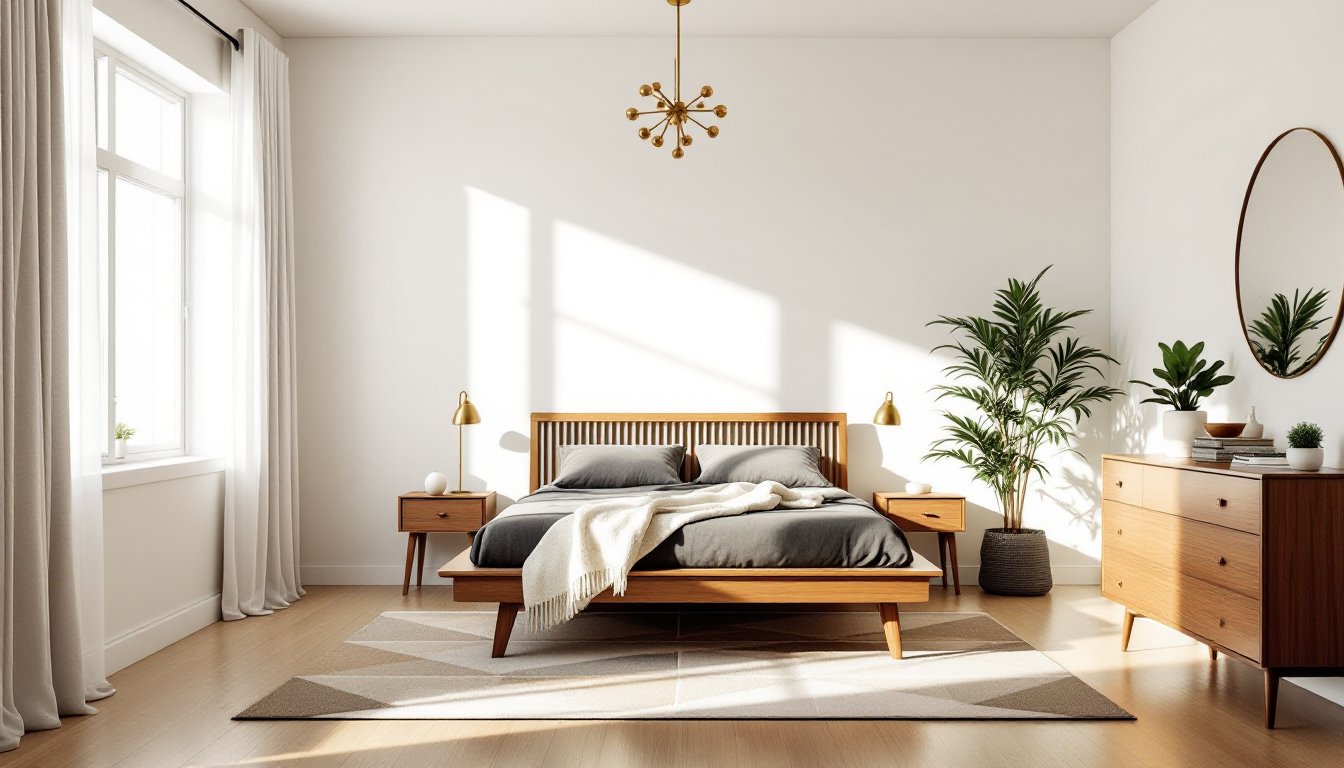
Mid century modern design continues to dominate bedroom renovations for good reason. Clean lines, functional elegance, and warm wood tones create spaces that feel both retro and refreshingly current. Unlike trend-driven styles that age poorly, mid century modern pieces work across decades, making them a smart investment for homeowners planning long-term or staging for resale. This guide breaks down what actually defines the style, which furniture pieces matter most, and how to select and arrange them without turning a bedroom into a museum exhibit. Whether sourcing vintage originals or quality reproductions, the principles stay the same.
Table of Contents
ToggleKey Takeaways
- Mid century modern bedroom furniture is defined by tapered legs, low profiles, mixed materials, and organic shapes that create timeless, retro-current design suitable for long-term investments and home resale.
- Platform beds with slatted support systems and tapered legs form the foundation of mid century modern style, offering a signature low silhouette of 12–18 inches compared to traditional 24+ inch frames.
- Quality mid century bedroom furniture pieces require solid wood construction, accurate joinery details like dovetail drawers, and finishes that enhance wood grain rather than heavy stains or plastic-looking polyurethane.
- Vintage mid century modern dressers cost $800–$2,500, while quality reproductions start at $400—inspect joinery, veneer condition, and drawer glides carefully to ensure durability and authentic proportions.
- Complete your mid century modern bedroom by layering natural textures, limiting patterns to single elements, incorporating geometric rugs, minimalist lighting, and keeping surfaces decluttered to maximize the style’s essential negative space.
- Scale furniture to your room size: stick with 54–60 inch dressers in bedrooms under 120 square feet, maintain 30-inch walkways around beds, and choose walnut, teak, or oak finishes over generic stained softwood.
What Defines Mid Century Modern Bedroom Furniture?
Mid century modern refers to design produced roughly between 1945 and 1969, though the aesthetic borrows from earlier Bauhaus and Scandinavian movements. The style emerged when post-war manufacturing enabled mass production of furniture that prioritized function over ornamentation.
Key characteristics include:
- Tapered legs: Typically angled outward or inward, often made from solid wood like walnut, teak, or oak
- Low profiles: Furniture sits closer to the floor compared to traditional or contemporary pieces
- Mixed materials: Wood combined with metal accents, cane webbing, or upholstered panels
- Minimal hardware: Drawer pulls and handles are understated or recessed, maintaining smooth surfaces
- Organic shapes: Gentle curves contrast with straight lines, think rounded headboard corners or kidney-shaped mirrors
Authentic mid century pieces used solid hardwood construction with joinery techniques like dovetail or mortise-and-tenon. Reproductions often substitute veneer over particleboard or MDF. That’s not necessarily bad, veneer can be stable and affordable, but check core materials. Solid wood ages better and handles repairs more gracefully.
Finish matters. Original pieces featured Danish oil, lacquer, or shellac that enhanced wood grain without heavy staining. Modern reproductions sometimes use polyurethane for durability, which works fine but looks slightly more plastic under close inspection.
Color palettes lean toward natural wood tones, walnut’s deep brown, teak’s golden hue, oak’s lighter grain. Upholstery typically uses muted earth tones, burnt orange, mustard yellow, or teal. High-contrast black and white accents appear sparingly.
Essential Furniture Pieces for a Mid Century Modern Bedroom
Platform Beds and Low-Profile Frames
The platform bed defines mid century bedroom design. Unlike traditional beds requiring box springs, platform frames use slats or solid panels to support the mattress directly. This creates the signature low silhouette, typically 12 to 18 inches from floor to mattress top, compared to 24+ inches for standard frames.
Look for frames with:
- Solid wood slat systems spaced 2 to 3 inches apart (closer spacing prevents mattress sagging)
- Integrated or floating headboards that attach directly to the frame or mount to the wall
- Tapered legs in walnut, teak, or oak, usually 6 to 10 inches tall
- Minimal footboards or none at all, footboards interrupt the clean horizontal line
Some platform beds include built-in nightstands cantilevered from the frame. These work well in tight spaces but limit furniture rearrangement. Make sure cantilevered shelves use internal bracing, unsupported MDF shelves sag over time.
Headboard options range from simple horizontal panels to statement pieces with geometric details like vertical slats or cane inserts. Upholstered headboards in linen or wool add softness without breaking from the aesthetic. Wall-mounted headboards require locating studs or using heavy-duty anchors rated for the weight, typically 50+ pounds for solid wood.
Mattress compatibility: Memory foam and latex mattresses pair well with slatted platforms. Innerspring mattresses need slats no more than 3 inches apart to prevent coil damage. Some manufacturers void warranties if slat spacing exceeds their spec, so check before buying.
Dressers and Nightstands with Clean Lines
Dressers in mid century style feature long, low profiles, often 60 to 72 inches wide but only 30 to 34 inches tall. This horizontal emphasis balances the room’s proportions and provides wall space above for mirrors or art.
Construction details to verify:
- Dovetail joinery on drawers (indicates quality construction)
- Center-mounted glides or wooden runners (metal side-mount glides are modern additions but work fine)
- Drawer fronts flush with the case or slightly recessed, never overlapping
- Solid wood drawer boxes, not stapled particleboard
Many vintage dressers used Danish cord pulls or simple wooden knobs. Reproductions sometimes add metal bar pulls, which can work if they’re slim and unobtrusive.
Nightstands typically range from 20 to 24 inches tall to align with low platform beds. Common configurations include:
- Single-drawer units with an open shelf below
- Two-drawer stacks for more storage
- Floating wall-mounted shelves with a single drawer
Floating nightstands require mounting to studs or using toggle bolts rated for at least 50 pounds. Mark stud locations before finalizing bed placement, you can’t always position furniture exactly where studs fall, so plan accordingly.
Top surfaces should be solid wood or thick veneer, not thin laminate that chips easily. A nightstand takes abuse from water rings, phone chargers, and dropped books.
How to Choose the Right Mid Century Modern Bedroom Furniture
Measure the space first. Mid century furniture reads as spacious because pieces sit low and leave visual breathing room. A 72-inch dresser in a 10×12-foot bedroom will dominate the wall. In rooms under 120 square feet, stick with 54 to 60-inch dressers and skip bulky armoires.
Leave minimum 30-inch walkways around the bed. For rooms with two nightstands, that’s 30 inches from bed edge to wall on each side, plus the nightstand width (typically 18 to 24 inches). In tight quarters, use one nightstand or wall-mounted alternatives.
Vintage vs. reproduction: Authentic mid century pieces (1945–1969) command premium prices, especially from known makers like Lane, Bassett, or Scandinavian imports. Expect to pay $800 to $2,500 for a vintage dresser in good condition. Reproductions start around $400 but vary wildly in quality.
When sourcing vintage:
- Inspect joinery closely. Loose joints require regluing, not a dealbreaker but factor in repair time.
- Check for veneer damage. Small chips can be filled and colored: large delamination is harder to fix.
- Test drawer glides. Worn wooden runners can be waxed or replaced: seized metal glides might need full removal.
- Ask about finish. Original lacquer can yellow or crack. Refinishing destroys patina and resale value but may be necessary for heavily damaged pieces.
Quality reproductions should use:
- Solid wood legs and frames (veneer on panels is acceptable)
- Kiln-dried hardwood to prevent warping
- Finishing techniques that enhance grain, avoid heavy stains that obscure wood character
Material choices: Walnut offers rich, dark tones and strong grain patterns. Teak brings golden hues and natural oils that resist moisture (why it’s popular for outdoor furniture). Oak is lighter and more affordable but equally durable. Avoid pieces described as “walnut finish” or “teak-look”, that’s stained softwood or veneer over particleboard.
Consider design elements from modern interiors that pair well: geometric rugs, sculptural lighting, and minimal window treatments that don’t compete with furniture lines.
Scale furniture to ceiling height. Standard 8-foot ceilings suit low-profile pieces. In rooms with 9 to 10-foot ceilings, add vertical elements like tall floor mirrors or statement lighting to balance the horizontal furniture lines.
Styling Tips to Complete Your Mid Century Modern Bedroom
Layer textures, not patterns. Mid century bedrooms rely on material contrast, smooth wood against nubby linen, polished metal beside matte ceramic. Limit bold patterns to one element: either bedding, a rug, or window treatments, not all three.
Bedding choices:
- Solid-color duvet covers in linen, cotton, or wool
- Simple geometric patterns like thin stripes or grid prints
- Avoid florals, paisley, or busy prints that clash with clean-lined furniture
Rugs anchor the space. Look for:
- Low-pile wool or flatweave construction in geometric patterns
- Size guidelines: 8×10 feet for queen beds, 9×12 for king, with at least 18 inches of rug extending beyond the bed on three sides
- Natural fiber alternatives like jute or sisal for textural contrast
Lighting completes the look. Swap builder-grade ceiling fixtures for:
- Sputnik chandeliers with brass or matte black arms
- Pendant lights with globe shades in white glass or metal
- Arc floor lamps that curve over nightstands, eliminating table lamp clutter
Table lamps should have ceramic, wood, or metal bases with simple drum or cone shades. Avoid ornate bases or fussy fabric shades.
Wall art and mirrors: Mid century style favors abstract art, line drawings, or black-and-white photography in simple frames. Oversized mirrors with thin wood or brass frames bounce light and enhance the spacious feel.
Avoid:
- Gallery walls with mismatched frames (too busy)
- Inspirational quotes or farmhouse-style signs
- Heavy drapes or valances, use simple panels or skip window treatments if privacy allows
Bring in live plants for the organic element central to mid century design. Snake plants, rubber trees, and pothos thrive indoors and suit the aesthetic. Use ceramic or wood planters, skip ornate or rustic containers. For more inspiration on blending contemporary design elements, look at how materials and shapes interact across furniture and accessories.
Declutter ruthlessly. Mid century modern relies on negative space. Dressers with crowded tops, overstuffed bookshelves, or excessive throw pillows undermine the clean aesthetic. Limit nightstand items to a lamp, one book, and maybe a small plant or dish.
Hardware and fixtures: Swap outdated door hardware, light switches, and outlet covers for minimal designs. Brushed brass, matte black, or polished nickel align with the period’s aesthetic. This small upgrade costs $50 to $150 but ties the room together.
Keep paint colors neutral, whites, warm grays, or soft beiges let wood tones stand out. Accent walls work if using muted tones like sage green, dusty blue, or terracotta. High-contrast black accent walls can work but risk overwhelming smaller rooms.
Conclusion
Mid century modern bedroom furniture delivers lasting style without requiring constant updates. Focus on quality construction, accurate proportions, and restrained styling. Whether investing in vintage originals or well-made reproductions, the bones of this design approach, clean lines, functional forms, honest materials, create bedrooms that feel intentional and uncluttered. Measure carefully, choose pieces that fit the space, and resist the urge to over-decorate.