
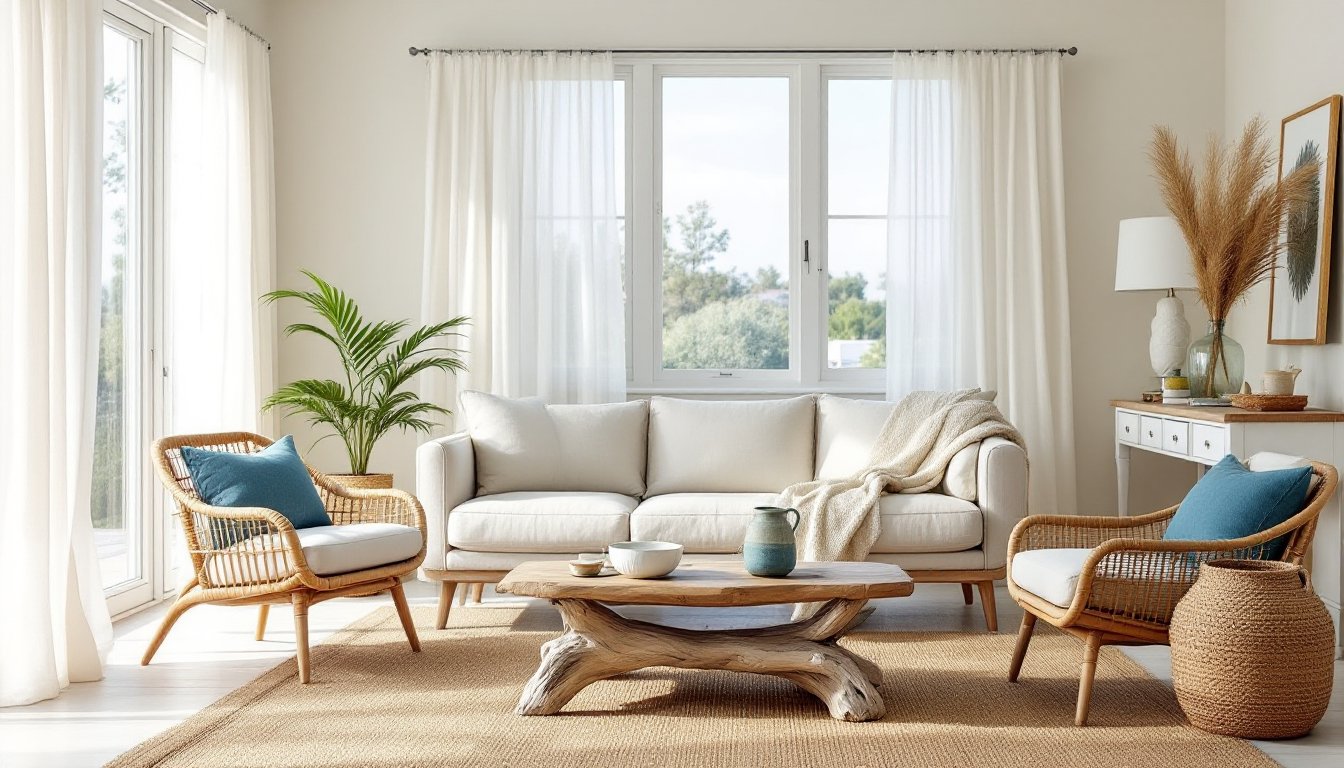
Coastal design doesn’t mean drowning a room in anchors and seashells. It’s about capturing the ease of seaside living, relaxed textures, natural materials, and a color palette that feels like salt air and sunshine. Getting the furniture right is the foundation. Too formal and you lose the breezy feel. Too casual and it looks like a beach rental. The goal is a living room that balances comfort with enough visual interest to feel intentional, not accidental. Whether you’re steps from the shore or hundreds of miles inland, the right pieces can bring that coastal vibe home.
Table of Contents
ToggleKey Takeaways
- Coastal living room furniture prioritizes natural materials like rattan, teak, and reclaimed wood with light finishes over formal, overstuffed silhouettes.
- Essential pieces include slipcovered sofas in durable fabrics, lightweight accent seating, and minimalist tables with visible wood grain that let spaces feel airy and intentional.
- Layer textures—such as jute rugs, linen upholstery, and rope details—rather than relying on bold patterns or color contrasts to create authentic coastal depth.
- Choose a neutral base palette of whites, sand, soft blues, and driftwood gray, then add nature-inspired accent colors like coral or sea glass green through accessories.
- Edit ruthlessly by keeping surfaces clear, mixing modern pieces with natural textures, and avoiding over-themed nautical clichés to maintain a relaxed, lived-in coastal vibe.
What Defines Coastal Living Room Furniture?
Coastal furniture leans on natural materials, light finishes, and relaxed silhouettes. Think rattan, wicker, teak, and reclaimed wood, materials that handle humidity and feel organic. Metal accents tend toward brushed nickel, brass, or wrought iron with a weathered patina, not shiny chrome.
Upholstery fabrics should be durable and low-maintenance. Linen, cotton duck, and performance fabrics hold up to sandy feet and wet swimsuits better than velvet or silk. Slipcovers are common, they’re washable and give a casual, lived-in look.
Proportions matter. Coastal pieces usually have open bases and visible legs rather than heavy skirts or solid bases. This keeps things visually light and lets air (real or perceived) circulate. Avoid overstuffed, formal silhouettes. A tufted Chesterfield sofa reads traditional, not coastal.
Texture is more important than pattern. Woven seagrass, rope-wrapped legs, whitewashed wood grain, and nubby linen all add depth without busy prints. When pattern does appear, it’s usually subtle stripes, simple geometrics, or organic shapes, not loud florals or heavy damask.
Essential Furniture Pieces for a Coastal Living Room
Sofas and Seating
The sofa sets the tone. A three-cushion slipcovered sofa in natural linen or cotton is a coastal staple. Look for frames made from kiln-dried hardwood, poplar, oak, or eucalyptus, with eight-way hand-tied springs if budget allows. Foam-wrapped coil cushions hold shape better than all-foam options.
For smaller spaces, a sectional in performance fabric (like those from Ashley Home Furniture sectionals) gives you seating without requiring multiple pieces. Choose one with low arms and track or English roll styles, nothing too ornate.
Accent seating should mix materials. Pair the sofa with a rattan lounge chair or two upholstered armchairs in a contrasting texture. Wicker and cane work well here, as long as the weave is tight and the frame is reinforced. Outdoor-rated wicker can live indoors and handles moisture better than indoor-only versions.
Skip matching sets. Coastal style embraces a collected-over-time feel. One chair in natural rattan, another upholstered in ticking stripe, and a bench with a driftwood base all work together if the scale and color palette align.
Coffee Tables and Accent Tables
Coffee tables should be sturdy but not visually heavy. Reclaimed wood with a light whitewash or natural finish is classic. Look for tables with visible grain, knots, and imperfections, they add character. Avoid high-gloss or dark espresso finishes: they pull too formal.
Driftwood-style tables are popular, but quality varies wildly. Real driftwood bases are expensive and require skilled joinery. Many affordable versions use resin or composite with a faux finish. If going that route, make sure the top is real wood or tempered glass, not particleboard.
Glass-top tables with natural bases, rope-wrapped pedestals, woven seagrass, or bleached wood, keep the look airy. Tempered glass is a must for safety. Standard annealed glass can shatter more easily.
Side tables and consoles should be lightweight. A wicker drum table works as a plant stand or drink perch. Nesting tables in painted wood or metal let you pull out extra surface area when needed without crowding the room daily.
Avoid overly ornate carvings, turned spindles, or heavy aprons. Keep lines simple. A basic parsons-style table in whitewashed oak beats a heavily carved piece every time in a coastal space.
Choosing the Right Materials and Finishes
Wood finishes should be light or weathered. Whitewash, pickled oak, driftwood gray, and natural blonde tones dominate. These finishes often use water-based stains or lime wash, which let the grain show through. Oil-based polyurethane in satin or matte works for tabletops that need durability: skip the high-gloss.
For outdoor or high-humidity areas, teak and eucalyptus resist moisture naturally. Both contain oils that repel water and resist rot. Teak will silver over time if left untreated, some people love the patina, others oil it annually to maintain the honey tone.
Wicker and rattan need proper construction. Rattan is solid and bendable: it’s used for frames. Wicker is a weaving technique, not a material, it can be made from rattan, reed, willow, or synthetic resin. Synthetic all-weather wicker (polyethylene resin) holds up better in damp climates but doesn’t have the same organic texture as natural materials.
Upholstery matters more than people think. Performance fabrics with stain resistance (like Crypton, Sunbrella, or similar treatments) are worth the upcharge if you have kids or pets. They’re not indestructible, but they handle spills and UV exposure better than untreated cotton.
Metal accents should look aged or natural. Brushed nickel, antique brass, or powder-coated steel in matte white or seafoam work. Avoid shiny chrome or oil-rubbed bronze, they skew too contemporary or too rustic.
Texture layering is key. A linen sofa, jute rug, rope-wrapped table legs, and a chunky knit throw all add tactile variety without clashing. Coastal rooms often succeed through layered textures rather than bold color contrasts.
Color Palettes That Bring the Coast Inside
The classic coastal palette is white, sand, seafoam, soft blue, and driftwood gray. It’s not the only option, but it’s the safest starting point. These colors reflect light, keep spaces feeling open, and don’t compete with ocean or garden views.
White doesn’t mean sterile. Off-whites with warm undertones, cream, ivory, linen white, feel softer than stark cool whites. Test paint samples in your room’s light. North-facing rooms may need warmer whites: south-facing can handle cooler tones.
Blues should be muted, not primary. Think weathered denim, spa blue, or dusty turquoise. Navy can work as an accent but use it sparingly, too much and the room feels nautical-themed instead of coastal.
Neutrals ground the palette. Taupe, beige, greige, and warm gray prevent the space from feeling washed out. A sofa in oatmeal linen or a console in driftwood gray adds visual weight without heaviness.
Accent colors come from nature: coral, sand dollar tan, sea glass green, or sun-bleached terracotta. These work in throw pillows, artwork, or a single accent chair. Avoid hot pink, lime green, or other saturated tropicals, they lean more Caribbean than coastal.
Wood tones should stay light. Honey oak, whitewashed pine, or bleached maple keep the palette cohesive. Dark walnut or cherry pulls the style traditional.
Consider the undertones. Coastal palettes typically lean cool or neutral. Warm yellows, oranges, and reds (except muted coral or terracotta) clash with the blues and greens. If you’re pulling inspiration from modern coastal interiors, notice how even bold accent pieces stay within a tonal range.
Styling Tips for an Authentic Coastal Look
Start with a neutral base. Large pieces, sofa, area rug, main tables, should be in neutrals or soft blues. This gives flexibility to change accents seasonally without replacing major furniture.
Layer textures aggressively. A jute or sisal rug, linen curtains, a chunky cotton throw, and woven baskets all add dimension. Coastal style relies on this more than pattern or color contrast.
Keep accessories minimal and natural. Driftwood sculptures, coral specimens (sustainably sourced or faux), ceramic vases in reactive glazes, and woven trays beat mass-produced nautical decor. Skip the rope letters and anchor wall art unless you’re decorating a beach rental.
Plants bring life and texture. Fiddle leaf figs, palms, or snake plants in natural fiber baskets or simple ceramic pots fit the vibe. Avoid fussy floral arrangements, single stems in glass bottles or a bowl of seagrass balls work better.
Window treatments should be simple. Linen or cotton curtains in white or natural tones, either on rings or a simple rod, keep things breezy. Avoid heavy drapes, valances, or fussy tiebacks.
Lighting matters. Natural light is ideal, but supplement with lamps that have rope-wrapped bases, driftwood finials, or ceramic bodies in organic shapes. Avoid ornate chandeliers or heavy metal fixtures.
Don’t over-theme. One or two coastal nods are enough. A bowl of shells on a console or a piece of ocean photography is plenty. More than that and the room becomes a theme park.
Mix in modern pieces. A sleek side table or a contemporary floor lamp prevents the space from looking dated. Coastal doesn’t mean stuck in 2010. Modern furnishings can coexist with natural textures and light palettes.
Scale furniture to the room. Oversized sectionals cramp small spaces: a single loveseat in a large room looks lost. Measure carefully and use painter’s tape to map out footprints before buying.
Edit ruthlessly. Coastal style favors breathing room over abundance. Leave some empty space on shelves, keep coffee tables mostly clear, and resist the urge to fill every corner.