
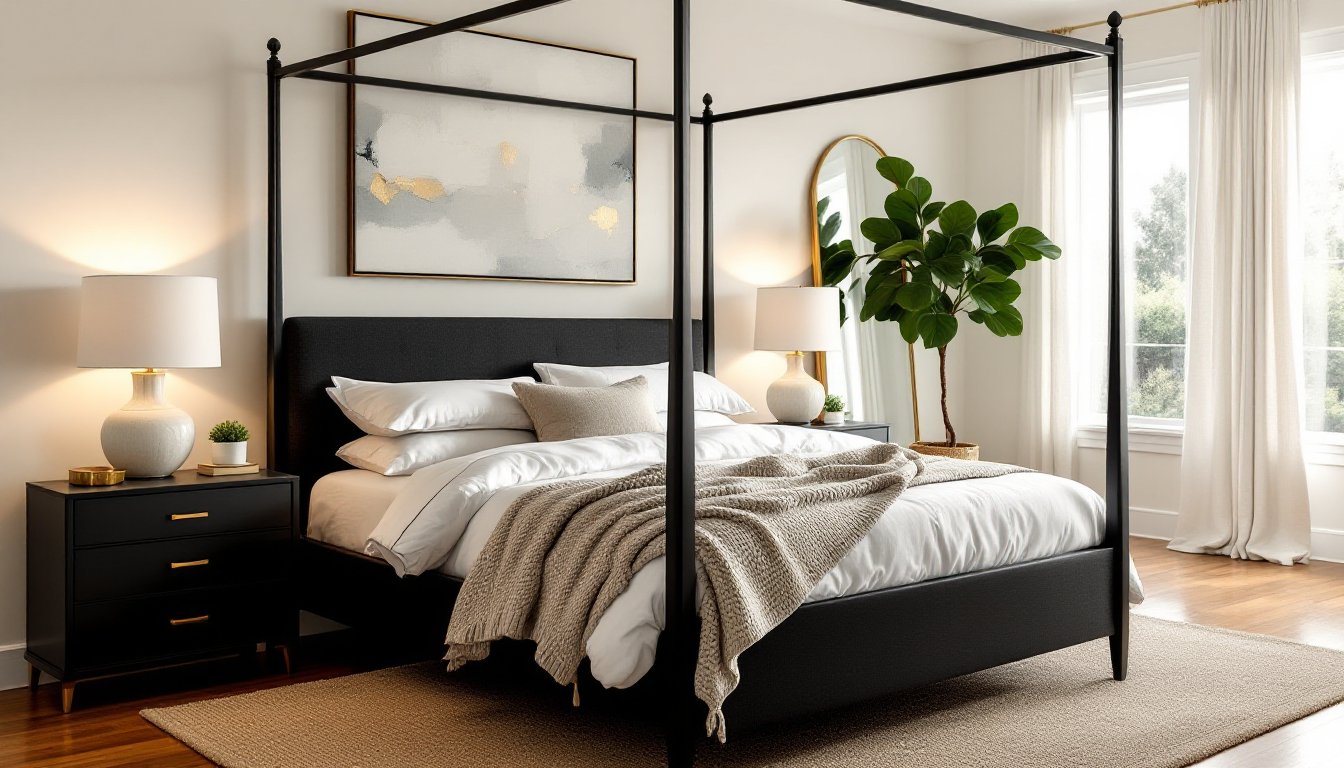
Black bedroom furniture can anchor a room with sophistication, but many homeowners worry it’ll make their space feel cramped or cave-like. The truth is, dark pieces create dramatic contrast and design flexibility, if you know how to balance them. Whether you’ve inherited a black dresser set or deliberately chose ebony-stained hardwood, the right palette, textures, and lighting turn heavy furniture into a design asset. This guide walks through proven strategies to make black bedroom furniture work in any space, from moody maximalist looks to airy Scandinavian retreats.
Table of Contents
ToggleKey Takeaways
- Black bedroom furniture creates timeless elegance and visual balance by anchoring a room while hiding wear better than lighter finishes, making it a practical choice for high-use spaces.
- Pair black bedroom furniture with warm neutral wall colors (LRV 70-80) like cream and beige to prevent a cramped feeling while maintaining sophisticated contrast.
- Layer multiple textures—jute rugs, linen textiles, rattan accents, and plants—to add dimension and prevent dark furniture from appearing flat or one-dimensional.
- Install three light sources minimum (ambient, task, and accent lighting) with warm white LEDs (2700K-3000K) and use mirrors strategically to brighten the space and counteract the cave effect.
- Choose light wall colors, oversized art, and white architectural molding to balance the visual weight of black furniture and create an open, inviting bedroom design.
- In smaller or moody rooms, embrace jewel-tone accent walls with metallic accents to complement black furniture while maintaining visual depth and preventing a bottom-heavy aesthetic.
Why Black Bedroom Furniture Creates Timeless Elegance
Black furniture offers visual weight that grounds a room, preventing the floaty, unfinished feel common in all-white or pastel spaces. Unlike trend-driven finishes (hello, honey oak and gray-washed pine), black reads neutral across decades, it worked in Victorian bedrooms and still anchors contemporary lofts.
From a design standpoint, black acts as a neutral anchor that pairs with virtually any color palette. It provides high contrast against light walls, making architectural details like crown molding or wainscoting pop. In smaller bedrooms, black furniture can actually define zones better than lighter pieces, which tend to visually blend into walls.
One practical advantage: black finishes hide wear better than lighter woods. Scratches, dings, and water rings are far less visible on dark surfaces, which matters in high-use pieces like nightstands and dressers. This durability makes black furniture a smart choice for rental properties or homes with kids and pets.
The key challenge is avoiding a bottom-heavy look. Since black furniture absorbs light rather than reflecting it, rooms need deliberate brightness through wall color, textiles, and lighting, covered in detail below.
Choosing the Right Color Palette for Black Furniture
Warm Neutral Combinations
Cream, beige, and warm white walls create classic contrast without the starkness of pure white. Paint with an LRV (Light Reflectance Value) of 70-80 keeps the room bright while adding warmth. Sherwin-Williams Alabaster (LRV 82) and Benjamin Moore White Dove (LRV 83.16) are popular choices that prevent the sterile hospital feel.
Layer in tan, camel, or terracotta through bedding, area rugs, and window treatments. A jute or sisal rug adds texture while warming up dark furniture legs. Linen duvet covers in oatmeal or sand tones soften the hard edges of black wood or metal frames.
Warm-toned woods (oak, walnut, teak) work surprisingly well with black furniture. A medium-oak floor or walnut picture frames introduce organic warmth without competing visually. Avoid matching wood tones exactly, variation adds depth.
Bold and Moody Color Schemes
For those comfortable with drama, deep jewel tones (emerald, sapphire, burgundy) embrace the darkness instead of fighting it. Pair black furniture with charcoal or navy walls for a cocooning effect popular in dramatic bedroom designs. This approach works best in larger bedrooms (12×14 feet or bigger) with ample natural light.
Accent walls in dark colors can ground the furniture without overwhelming the space. Paint the bed wall in a deep slate or forest green, leaving the other three walls lighter for balance. This technique creates a focal point and prevents the “floating in darkness” feeling.
Metallic accents, brass, gold, or copper, pop against black and add glamour. Swap standard nickel drawer pulls for unlacquered brass, or add a gold-framed mirror above the dresser. The warm metal tones provide visual breaks in the dark furniture while reflecting light.
Textures and Materials That Complement Black Pieces
Layered textiles prevent black furniture from reading flat and one-dimensional. Mix smooth cotton sheets with a chunky knit throw, linen pillowcases, and a velvet duvet. The varied textures catch light differently, adding visual interest without introducing competing colors.
Natural fiber rugs, jute, sisal, seagrass, contrast beautifully with glossy black finishes. An 8×10 jute rug under the bed softens the look of dark furniture legs and adds warmth underfoot. Avoid overly plush rugs that can make the room feel heavy: flatweave or low-pile options maintain airiness.
Woven elements like rattan, wicker, or cane break up the solidity of black wood. A rattan headboard, woven baskets for storage, or cane-backed chairs add organic texture. These materials also introduce subtle color variation, honey tones in rattan, gray notes in weathered wicker, that complement black without clashing.
Glass and acrylic furniture pieces create visual breathing room. Swap a solid nightstand for one with a glass top, or add an acrylic chair in the corner. These transparent elements don’t compete with black furniture but prevent the room from feeling overstuffed.
Greenery provides the ultimate texture contrast. Large-leaf plants (fiddle-leaf fig, monstera) or cascading pothos soften hard furniture edges. The living texture and varied green tones add movement and freshness to static black pieces. Many interior designers consider plants essential when working with dark bedroom palettes.
Lighting Strategies to Brighten Dark Furniture
Maximize natural light first. Remove heavy drapes in favor of sheer linen curtains or woven shades that filter light while maintaining privacy. If privacy isn’t a concern, go bare, windows framed by black furniture create striking architectural moments.
Layer three light sources minimum: ambient (overhead), task (reading lamps), and accent (decorative). An overhead fixture (ceiling-mounted or semi-flush) provides baseline brightness, aim for LED bulbs in the 2700K-3000K range for warm white light. Cooler temperatures (4000K+) can make black furniture look harsh.
Table lamps on nightstands add symmetry and task lighting. Choose lamps with light-colored shades (white, cream, pale gray) to maximize light reflection. The lampshade diameter should be roughly one-third the width of the furniture piece it sits on, for a 24-inch-wide nightstand, use an 8-inch shade.
Wall sconces free up nightstand space and direct light upward, brightening ceilings and walls. Install sconces 60-66 inches from the floor (measured to the center of the fixture) for optimal reading height. Swing-arm styles add adjustability.
Mirrors opposite windows double natural light and create depth. A large leaning mirror (3×5 feet or bigger) propped against the wall opposite a window reflects daylight throughout the room. Position it to catch morning or afternoon sun, depending on window orientation.
Uplighting prevents the cave effect. A torchiere lamp in the corner or LED strips behind the headboard cast light upward, making ceilings feel taller and rooms brighter. This indirect lighting softens the heaviness of dark furniture.
Avoid relying solely on overhead lighting, it creates harsh shadows around black furniture and flattens the room. Homeowners working with limited electrical options can use battery-powered puck lights inside open shelving or under floating nightstands for accent lighting without running new wiring.
Wall Treatments and Art for Black Bedroom Sets
Light wall paint is the most effective backdrop for black furniture. Stick to whites, off-whites, and light grays with LRVs above 70. Test samples in your actual lighting conditions, north-facing rooms need warmer whites (cream-based), while south-facing rooms can handle cooler tones.
Textured wall treatments add dimension without darkening the space. Shiplap painted white, beadboard wainscoting, or subtle grasscloth wallpaper create visual interest while keeping walls bright. Avoid busy patterns that compete with the strong lines of black furniture.
Large-scale art balances the visual weight of dark furniture. A single oversized piece (36×48 inches or larger) above the bed or dresser anchors the room without cluttering it. Choose art with light backgrounds or bright accent colors to lift the overall palette, abstract pieces with white, gold, or pastel elements work particularly well.
Gallery walls can work but require restraint. Stick to white or light wood frames to avoid a chaotic look. Odd-numbered groupings (3, 5, 7 pieces) feel more organic than symmetrical grids. Maintain consistent spacing, 2-3 inches between frames, to create cohesion.
Floating shelves in light wood or white break up wall space and add functionality. Install shelves 12-18 inches above furniture to create a visual connection without crowding. Style them with a mix of books, small plants, and decorative objects, keeping roughly one-third of the shelf space empty prevents a cluttered appearance.
Accent walls work when done strategically. Instead of a dark paint color, consider peel-and-stick wallpaper in a light geometric pattern or botanical print. This adds personality without permanent commitment, which matters if you’re testing a bold look. Current design trends favor sophisticated bedroom styling that balances dark furniture with refreshed wall treatments.
Architectural molding painted in bright white adds classic detail that complements traditional black furniture. Chair rail molding installed at 32-36 inches from the floor creates a horizontal line that balances tall dressers or armoires. Crown molding draws the eye upward and makes ceilings feel higher, essential when grounding a room with dark furniture.