
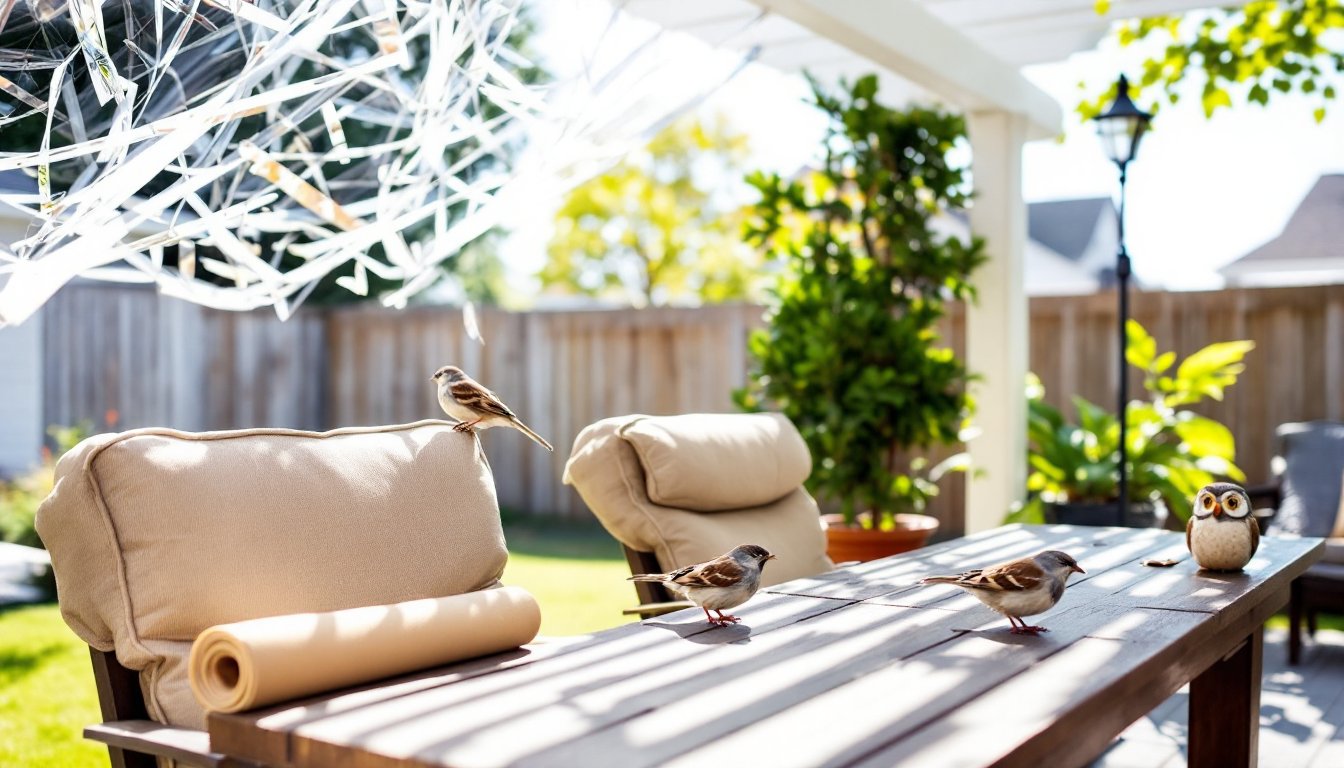
Bird droppings on cushions, nesting material wedged into table crevices, and feathers scattered across freshly cleaned surfaces, outdoor furniture quickly becomes a favorite perch for birds if left unprotected. The issue isn’t just aesthetic. Bird waste is acidic and can permanently stain or corrode fabric, metal, and wood finishes over time. This guide covers nine practical, tested methods to keep birds away from patio furniture, from physical barriers to habitat modification. Some solutions work immediately: others require consistent maintenance. The right approach depends on the bird species, patio layout, and how much time a homeowner wants to invest in prevention.
Table of Contents
ToggleKey Takeaways
- Keeping birds off patio furniture requires addressing why they’re attracted—elevated shelter, nearby food sources, and water features—before implementing deterrent methods.
- Physical barriers like heavyweight furniture covers, bird spikes, and UV-resistant netting provide immediate protection and work best when deployed consistently.
- Visual and scent-based deterrents—including reflective tape, predator decoys, essential oil sprays, and ultrasonic devices—require rotation every 4 to 6 weeks to prevent birds from adapting.
- Strategic furniture placement away from overhangs, food sources, and nearby branches reduces inherent attraction without constant maintenance.
- Combine multiple layered methods and monitor effectiveness with a simple tracking log; long-term success relies on rotating deterrents as birds habituate to static solutions.
Why Birds Are Attracted to Your Patio Furniture
Birds don’t perch on outdoor furniture out of spite. They’re drawn to elevated, sheltered spots that offer protection from predators and weather.
Overhanging structures like pergolas, awnings, and covered patios create ideal roosting conditions. Birds feel safer under partial cover, especially during nesting season. Furniture positioned beneath these structures becomes a natural landing zone.
Food sources nearby amplify the problem. Hummingbird feeders, seed feeders, fruit trees, or even crumbs left on patio tables encourage repeat visits. Once birds associate the area with food, they’ll return daily and perch on whatever’s closest.
Water features and birdbaths are magnets for multiple species. After drinking or bathing, birds often rest on nearby furniture to preen and dry off. Cushioned chairs and loungers mimic the texture of nesting sites, making them attractive to certain species during breeding season.
Lack of nearby predators also plays a role. If the patio is fully enclosed, has limited foot traffic, or sits far from natural predator habitats, birds perceive it as a safe zone. Understanding these factors helps homeowners address the root cause instead of just treating symptoms.
Physical Deterrents That Protect Your Outdoor Furniture
Physical barriers create immediate obstacles that prevent birds from landing or nesting on furniture. These methods work best when deployed consistently.
Furniture covers are the simplest solution. Heavyweight vinyl or polyester covers eliminate perching surfaces entirely. Look for covers with tie-down straps or elastic hems, loose covers flap in wind and lose effectiveness. Waterproof covers also protect furniture from rain and UV damage, making them a dual-purpose investment. Remove covers only when the furniture is in active use, then replace them immediately afterward.
Bird spikes attach to flat surfaces like table edges, chair backs, and armrests. Commercial-grade spikes use stainless steel or polycarbonate prongs spaced 1 to 2 inches apart. They don’t harm birds: they just make landing uncomfortable. Installation requires adhesive backing or screws, depending on the surface. Spikes work well on durable outdoor furniture with rigid frames but can look industrial on decorative pieces.
Netting or mesh creates a physical barrier over entire seating areas. UV-resistant polyethylene netting with a 3/4-inch mesh prevents birds from accessing furniture without blocking light or airflow. Suspend the netting from pergola beams or patio roof structures using hooks and cable ties. Ensure the netting extends to the ground or furniture edges, gaps allow smaller birds to slip through.
Motion-activated sprinklers detect movement and release a short burst of water. Units like Orbit Yard Enforcer cover up to 1,600 square feet and run on batteries. Position the sensor to target furniture zones without soaking human pathways. Birds learn quickly to avoid areas with unpredictable water exposure.
Reflective and Visual Scare Tactics
Birds are naturally wary of sudden movement and flashing light. Visual deterrents exploit these instincts but require rotation to prevent habituation.
Reflective tape or Mylar strips create disorienting flashes when sunlight hits them. Cut strips 12 to 18 inches long and tie them to chair backs, table umbrellas, or nearby trees. Wind movement keeps the strips in motion. Replace faded tape every few months, dull reflective surfaces lose their deterrent effect.
Predator decoys mimic natural threats. Realistic owl or hawk decoys work best when repositioned every 2 to 3 days. Birds recognize stationary objects as harmless within a week. Some decoys include rotating heads or reflective eyes to extend effectiveness. Place decoys on elevated surfaces near furniture, ensuring they’re visible from multiple approach angles.
Holographic bird deterrent disks spin in the breeze and reflect light in unpredictable patterns. Hang them from pergola beams, tree branches, or shepherd’s hooks positioned near seating areas. Space disks 3 to 5 feet apart for consistent coverage. These work particularly well in sunny climates where consistent light exposure maximizes the reflective effect.
Natural Repellents and Scent-Based Solutions
Birds have sensitive respiratory systems, making certain scents effective deterrents. These methods require reapplication after rain or heavy dew.
Essential oil sprays using peppermint, eucalyptus, or citrus oils create an unpleasant environment for birds without harming them. Mix 10 to 15 drops of essential oil per cup of water in a spray bottle. Mist furniture cushions, armrests, and table surfaces every 2 to 3 days. Avoid using oils on porous materials like untreated wood, which can absorb and discolor. Homeowners can explore these and other outdoor care techniques for maintaining furniture longevity.
Vinegar solutions work similarly. Combine equal parts white vinegar and water, then spray onto hard furniture surfaces. The acetic acid smell dissipates for humans within an hour but lingers longer for birds. Reapply after cleaning furniture or following rainstorms.
Commercial bird repellent gels create a sticky, uncomfortable surface that birds avoid landing on. Products like Bird-X Transparent Bird Gel remain effective for months and can be applied to railings, table edges, or chair backs. Use a caulking gun for even application. The gel doesn’t dry, so it may collect dust over time, wipe clean and reapply as needed.
Predator urine granules mimic the scent of natural bird predators like foxes or coyotes. Scatter granules around the patio perimeter, not directly on furniture. This method works best along with other deterrents. Reapply every 4 to 6 weeks or after heavy rain washes away the scent.
Ultrasonic repellent devices emit high-frequency sounds that irritate birds but remain inaudible to most humans. Units like Bird-X Ultrason X cover up to 3,600 square feet and run on AC power or batteries. Effectiveness varies by bird species, some adapt quickly, while others avoid the area entirely. Position devices with clear line-of-sight to furniture areas for maximum coverage.
Strategic Furniture Placement and Habitat Modification
Adjusting the patio environment makes furniture inherently less attractive to birds without constant intervention.
Relocate furniture away from overhangs. Positioning seating areas in open, exposed zones reduces the shelter that birds seek. If full sun exposure isn’t practical, use freestanding umbrellas instead of permanent pergola coverage. Umbrellas can be closed when furniture isn’t in use, eliminating the overhead roosting surface.
Create distance from food sources. Move bird feeders, hummingbird feeders, and fruit trees at least 15 to 20 feet from seating areas. This breaks the association between the patio and feeding zones. If feeders must stay close, position furniture upwind to avoid droppings carried by prevailing breezes.
Trim overhanging branches. Tree limbs within 6 to 8 feet of furniture provide convenient launch points for birds. Prune branches to create a clear zone around the patio. This also improves airflow and reduces leaf litter on furniture surfaces. Certain trimming techniques can discourage roosting along fences and nearby structures as well.
Install alternative perching spots. Birds still need somewhere to land. Adding a standalone birdbath or perching post 20 to 30 feet away redirects their activity. Stock the area with nesting material like twigs or dried grass during breeding season, birds gravitate toward dedicated nesting zones and leave furniture alone.
Change furniture orientation. Angle chairs and loungers so backrests face away from prevailing wind and tree lines. This reduces the likelihood of birds using furniture as a windbreak or landing pad.
Cleaning and Maintenance Tips to Discourage Birds
Consistent cleaning removes the scent markers and organic residue that attract repeat visits. Birds often return to previously soiled spots.
Remove droppings immediately. Bird waste contains uric acid, which etches metal, fades fabric, and degrades wood finishes. Wear nitrile gloves and use a plastic scraper to lift dried droppings. Wash the area with a solution of 1 part bleach to 10 parts water, then rinse thoroughly. For fabric cushions, use an enzyme-based cleaner designed for pet stains, it breaks down organic proteins more effectively than standard detergent.
Hose down furniture weekly. Regular rinsing prevents buildup of pollen, dust, and food particles that attract insects, which in turn attract birds. Use a garden hose with a spray nozzle set to medium pressure. Avoid power washers on wicker, fabric, or painted surfaces, the force can damage finishes.
Store cushions indoors when not in use. Garage storage, deck boxes, or indoor closets keep cushions inaccessible to birds. If storage isn’t feasible, flip cushions upside down or stand them on edge to eliminate flat roosting surfaces.
Seal cracks and gaps in furniture frames. Birds stuff nesting material into hollow table legs, chair joints, and umbrella pole sleeves. Inspect furniture annually for openings and seal with exterior-grade caulk or foam inserts. This prevents nesting attempts that lead to permanent damage.
Sanitize surfaces after cleaning. Birds are attracted to the scent of previous droppings. After removing waste, wipe surfaces with a diluted vinegar solution or a commercial bird deterrent spray to eliminate lingering odor.
Long-Term Prevention Strategies for a Bird-Free Patio
Sustained success requires layering multiple methods and adjusting tactics as birds adapt.
Rotate deterrent methods every 4 to 6 weeks. Birds habituate to static solutions. Alternate between reflective tape, predator decoys, and scent repellents to maintain unpredictability. If owl decoys stop working, switch to hawk models or motion-activated devices.
Combine visual and physical barriers. A single method rarely works long-term. Pair furniture covers with reflective disks, or use bird spikes alongside ultrasonic devices. Layering creates redundancy, if one deterrent fails, others compensate.
Monitor for nesting activity in early spring. Most birds nest between March and July. Conduct weekly inspections of furniture, pergola beams, and nearby structures during this period. Remove nesting materials immediately (check local regulations, some species are protected). Early intervention prevents established nests that are harder to dislodge.
Adjust landscaping annually. Plant selection affects bird activity. Dense shrubs near the patio provide cover and nesting sites. Replace them with low-growing groundcovers or ornamental grasses that offer less shelter. Avoid berry-producing plants like holly or juniper within 20 feet of seating areas, fruit attracts birds and increases activity.
Track which methods work. Keep a simple log noting which deterrents were deployed and observed bird behavior. If reflective tape reduced activity for three weeks, then effectiveness dropped, that data informs future rotations. Some homeowners find that certain solutions work better during specific seasons or weather conditions.
Long-term prevention isn’t about eliminating birds from the property, it’s about steering them toward designated zones away from furniture. Homeowners who balance deterrents with alternative habitat options see the most consistent results.