
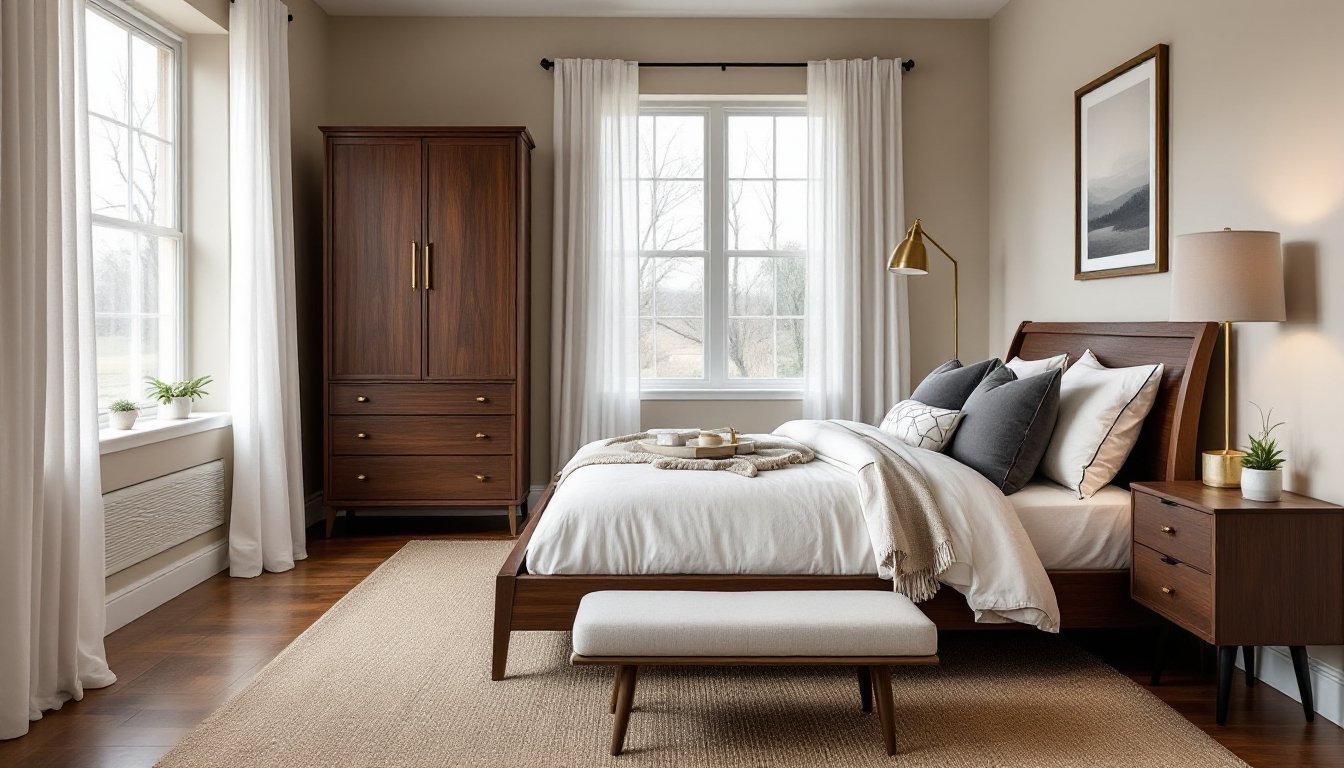
Many homeowners inherit furniture from different eras or find themselves with a collection that doesn’t quite match. The good news? Mixing dark and light wood furniture in a bedroom isn’t a design mistake, it’s an intentional strategy that adds visual interest and prevents the space from feeling flat or overly coordinated. The key lies in understanding balance, undertones, and the role of textiles in tying everything together. This guide walks through the principles, combinations, and common pitfalls to avoid when working with mixed wood tones.
Table of Contents
ToggleKey Takeaways
- Mixing dark and light wood furniture in bedroom design creates visual depth and prevents the space from feeling monotonous or overly coordinated.
- Apply a 60/40 or 70/30 ratio with one dominant wood tone to keep the look intentional; avoid an equal 50/50 split that can make rooms feel indecisive.
- Consider undertones and finish compatibility—pairing warm woods with warm or cool with cool creates better cohesion than mixing warm and cool tones without unification.
- Successful combinations like a dark bed frame with light nightstands, or light bed frame with dark dresser, anchor rooms while maintaining balance and airiness.
- Use neutral wall colors, textiles, and coordinated accent colors to unify mixed wood tones and prevent the space from feeling chaotic or haphazard.
- Avoid common pitfalls including too many wood species (stick to three), ignoring room lighting, overlooking proportion, and forcing the trend in spaces that don’t benefit from contrast.
Why Mixing Dark and Light Wood Works in Bedroom Design
A bedroom filled with identical wood finishes can look staged or overly matchy, like a furniture showroom rather than a lived-in space. Contrast between dark and light wood creates depth and dimension, drawing the eye around the room instead of letting it settle on one monotonous surface.
Dark woods like walnut, mahogany, and espresso-stained oak anchor a space and add weight, making them ideal for larger pieces such as bed frames or dressers. Light woods, maple, ash, white oak, or birch, reflect more light and keep the room from feeling cave-like. When combined thoughtfully, they balance visual heaviness with airiness.
This approach also offers practical flexibility. Homeowners can incorporate heirloom pieces, thrift finds, or new purchases without forcing everything into a single finish. The result feels curated rather than cookie-cutter, and it allows the bedroom to evolve over time without requiring a full furniture overhaul.
Essential Guidelines for Balancing Dark and Light Wood Tones
Successful mixing requires more than randomly placing pieces in a room. Two foundational strategies keep the look intentional rather than chaotic.
Choose a Dominant Wood Tone
Deciding which wood tone will occupy the majority of the space prevents the room from feeling split down the middle. A 60/40 or 70/30 ratio works well: the dominant tone appears in the largest or most prominent pieces, while the secondary tone shows up in accents or smaller furniture.
For example, if the bed frame and dresser are dark walnut, lighter nightstands or a bench at the foot of the bed introduce contrast without competing. Conversely, a light oak bed paired with a dark side table and bookshelf keeps the room bright while grounding it with darker accents.
Avoid an even 50/50 split. Equal distribution can make the room feel indecisive, as though it can’t commit to a direction.
Consider Undertones and Finish Compatibility
Wood isn’t just “dark” or “light”, it carries warm or cool undertones that affect how pieces interact. Warm woods (cherry, teak, golden oak) have red, orange, or yellow hues. Cool woods (gray-washed ash, ebonized walnut) lean toward gray or blue.
Mixing warm and cool tones is possible, but it requires care. A room with warm honey-toned pine and cool gray-stained furniture can feel disjointed unless unified by color choices in bedding or wall paint. Staying within the same undertone family, warm with warm, or cool with cool, creates a more cohesive look.
Finish sheen also matters. Pairing a high-gloss lacquered piece with heavily distressed or matte-finished furniture can look jarring. Aim for similar levels of sheen or distressing across pieces. If one nightstand has a satin finish, the dresser doesn’t need to match exactly, but it shouldn’t be mirror-polished or barn-weathered.
Successful Wood Furniture Combinations for Bedrooms
Certain pairings consistently deliver balanced, livable results. These combinations work because they respect scale, proportion, and visual weight.
Dark bed frame + light nightstands: The bed is the room’s focal point, so anchoring it with a dark walnut or espresso frame grounds the space. Flanking it with maple or white oak nightstands lightens the perimeter and keeps the room from feeling heavy. This setup works particularly well in smaller bedrooms where too much dark wood can shrink the space visually.
Light bed frame + dark dresser or armoire: A blonde wood bed keeps the sleeping area airy, while a darker dresser along the wall provides contrast and storage presence. This combination is ideal for rooms with limited natural light, as the bed won’t absorb what little brightness enters.
Mixed nightstands: Asymmetry can work if both pieces share a similar scale and height. A dark mahogany nightstand on one side and a light ash piece on the other creates interest without chaos, especially if they have similar drawer configurations or leg styles. This approach feels intentional when the rest of the furniture leans toward one dominant tone.
Accent pieces in the opposite tone: A bench, vanity stool, or small desk in the minority wood tone ties the room together. If the primary furniture is dark, a light wood bench at the foot of the bed or a birch ladder shelf reinforces the mix without overwhelming it.
Designers often use deep walnut wood tones mixed with greige accents to create warmth and balance in bedroom settings.
Using Color and Textiles to Unify Mixed Wood Furniture
Wood doesn’t exist in isolation. Wall color, bedding, rugs, and window treatments either amplify the contrast or smooth it into cohesion.
Neutral walls act as a backdrop that lets wood tones shine. Soft whites, warm grays, or beige work with nearly any wood combination. Avoid stark white if the woods lean warm, it can make them look dingy. A warm white or greige complements honey oak or cherry better.
Textiles bridge the gap. A duvet or throw that pulls colors from both wood tones, such as a cream and charcoal stripe or a muted navy that echoes cool undertones, visually connects the furniture. Area rugs perform the same function. A jute or sisal rug with darker threading ties light and dark woods together by introducing a third neutral that relates to both.
Accent colors should be intentional. If the bedroom leans warm (cherry and oak), introduce rust, terracotta, or gold in pillows or curtains. Cool-toned rooms (gray ash and ebonized walnut) pair well with slate blue, charcoal, or muted green. Avoid introducing too many competing colors, stick to a palette of three to four hues total, including the wood tones.
Metal finishes on hardware, lamps, and mirrors also influence cohesion. Brass and gold suit warm woods: nickel, chrome, and matte black complement cool tones. Mixing metals is fine, but consistency within a category (all warm or all cool) prevents visual clutter.
Common Mistakes to Avoid When Mixing Wood Tones
Even with the right principles, a few missteps can derail the look.
Too many wood species. Introducing more than three distinct wood tones creates visual noise. Stick to two primary finishes and, at most, one accent tone. Four or five different woods, even if well-coordinated, compete for attention.
Ignoring the room’s lighting. Natural light reveals warm or cool undertones that artificial light can mask. Test paint samples and furniture arrangements in both morning and evening light. A piece that looks balanced under daylight may appear mismatched under warm LED bulbs at night.
Overlooking proportion. Pairing an oversized dark armoire with a delicate light wood side table can look lopsided. Balance visual weight by ensuring that light and dark pieces are proportionate in scale. If the dark furniture is bulky, the light pieces should have enough presence to hold their own.
Matching everything else too perfectly. If the woods are mixed, resist the urge to make every other element identical. Matching lamps, identical nightstands, and perfectly symmetrical decor can make the wood contrast feel like an accident rather than a choice. Let some asymmetry exist.
Skipping a unifying element. Without something to tie the tones together, whether it’s a rug, wall color, or repeating textile pattern, the room can feel haphazard. Every successful mixed-wood bedroom has at least one cohesive layer, whether that’s consistent bedding, coordinated artwork, or a strategic paint color. Interior design professionals often discuss similar strategies on platforms like MyDomaine, where room-by-room styling tips help homeowners refine their approach.
Forcing a trend. Not every bedroom benefits from mixed woods. If the space is small, dark, or already visually busy, sticking to a single wood tone might serve it better. Mixing should enhance the room, not complicate it. When in doubt, lean toward simplicity and add contrast through textiles or accessories instead.
If the bedroom design leans toward high-end aesthetics, resources like Architectural Digest offer inspiration for balancing mixed materials in sophisticated interiors.