
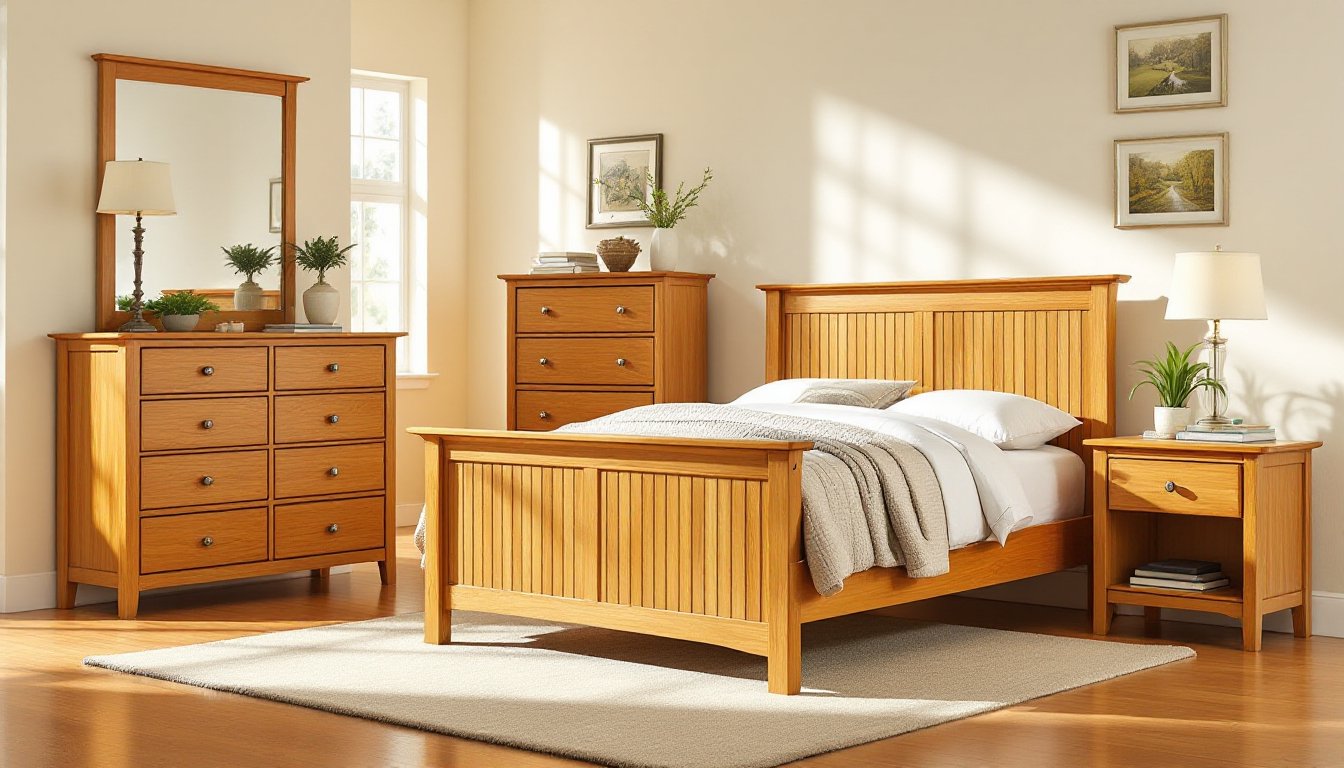
Oak bedroom furniture has outlasted trends for good reason. While painted MDF and particle board pieces fill landfills after a few moves, well-built oak furniture often gets passed down through generations. The grain patterns add character without overwhelming a space, and the wood’s hardness stands up to daily wear better than most alternatives. Whether someone’s furnishing their first bedroom or upgrading from college-era pieces, oak offers a balance of durability, repairability, and visual warmth that few materials match. This guide breaks down what makes oak furniture worth the investment and how to select pieces that’ll age gracefully.
Table of Contents
ToggleKey Takeaways
- Oak bedroom furniture outperforms cheaper alternatives with a Janka hardness score of 1,290–1,360, making it 25% harder than cherry and durable enough to pass through generations.
- Red oak suits climate-controlled indoor spaces with its prominent cathedral grain patterns, while white oak’s water-resistant properties make it better for humid environments or homes without central air.
- Quality oak bed frames feature corner blocks at leg-to-rail joints and bed bolts for disassembly, while dressers should have dovetail-jointed drawer boxes with full-extension ball-bearing slides rated for 75–100 pounds.
- Maintain oak bedroom furniture by controlling humidity between 35–45% relative humidity, using microfiber cloths for dusting, and addressing scratches promptly with sanding and restaining to prevent long-term damage.
- Estate sales and antique stores offer solid oak pieces at furniture-grade prices, and unfinished oak furniture can be personalized through proper sanding and staining, though prep work should follow 180–220 grit standards.
Why Oak Remains the Top Choice for Bedroom Furniture
Oak’s reputation isn’t just marketing. The wood scores around 1,290 to 1,360 on the Janka hardness scale (depending on species), making it roughly 25% harder than cherry and significantly tougher than pine. That translates to drawer fronts that don’t dent when someone bumps them with a vacuum, and bed frames that don’t develop stress cracks at joinery points.
The tight, consistent grain also takes stain and finish predictably. Unlike softer woods where end grain soaks up color unevenly, oak allows for controlled staining, important when matching pieces purchased years apart. The open grain structure does require grain filler for ultra-smooth finishes, but most bedroom furniture benefits from the texture it provides.
From a practical standpoint, oak’s widespread availability keeps costs reasonable compared to exotic hardwoods. Standard 4/4 (3/4″ actual thickness) red oak lumber runs $6–$10 per board foot in most regions, while white oak typically adds 20–30% to that price. That cost difference matters less in finished furniture, where construction quality and joinery have bigger impacts on longevity than species selection.
Oak also forgives minor damage better than veneered furniture. Deep scratches can be sanded and refinished without exposing substrate material. Loose joints can be reglued without worrying about delaminating thin veneer layers. For DIYers comfortable with basic furniture building techniques, solid oak construction means repairs stay straightforward.
Types of Oak Used in Bedroom Furniture
Two species dominate the market, and they’re not interchangeable.
Red oak (Quercus rubra) accounts for most mass-produced oak furniture. The wood features prominent cathedral grain patterns with reddish-brown undertones. It’s slightly more porous than white oak, which makes it absorb stain faster, helpful for deep, rich finishes but potentially blotchy if someone rushes the prep work. Red oak works well for pieces that’ll stay indoors in climate-controlled spaces. Most DIY bed frame projects use red oak because it’s readily available at big-box stores in standard dimensions.
White oak (Quercus alba) runs tighter-grained with golden or grayish-brown tones. The closed cellular structure makes it more water-resistant than red oak, historically the wood of choice for whiskey barrels and ship building. For bedroom furniture, that translates to better performance in humid climates or homes without central air. White oak also accepts fumed finishes (ammonia exposure that darkens the wood chemically), creating rich brown tones without stain.
Some manufacturers use quarter-sawn oak, where boards are cut perpendicular to the growth rings. This produces dramatic ray fleck patterns (those ribbon-like streaks across the grain) and improves dimensional stability. Quarter-sawn pieces cost 40–60% more than plain-sawn oak but move less with humidity changes, worth considering for wide panels like dresser tops.
European oak (Quercus robur and Quercus petraea) occasionally appears in higher-end imports. It’s similar to American white oak but often features tighter grain and slightly different color. Unless someone’s matching existing European pieces, the premium rarely justifies itself for bedroom furniture.
Popular Oak Bedroom Furniture Pieces and Styles
Bed Frames and Headboards
Oak bed frames range from minimalist platforms to ornate Arts and Crafts designs. Platform frames with integrated slat systems eliminate box spring needs and typically use 1×4 or 1×6 slats spaced 3–4 inches apart. Look for frames with corner blocks (triangular glue blocks reinforcing leg-to-rail joints), they dramatically reduce squeaking and racking over time.
Sleigh beds showcase oak’s bending properties, though most curved elements come from laminated or steam-bent pieces rather than solid boards. The sweeping headboard and footboard add visual weight, so they work best in rooms with 9-foot or higher ceilings.
Mission-style beds emphasize straight lines and exposed joinery. Mortise-and-tenon joints often extend through posts as decorative elements. These designs celebrate oak’s grain rather than hiding it under heavy carving, making them forgiving for DIYers following beginner-friendly plans.
When evaluating bed frames, check how rails connect to posts. Bed bolts (sometimes called connector bolts) allow for disassembly without weakening joints. Avoid frames that rely solely on L-brackets or wood screws driven directly into end grain, they loosen over time.
Dressers, Nightstands, and Storage Solutions
Dressers expose construction quality fast. Solid oak drawer boxes with dovetail joints (interlocking fingers at corners) outlast stapled or doweled boxes by decades. Full-extension ball-bearing drawer slides rated for 75–100 pounds handle the weight of folded jeans and sweaters without binding. Cheaper side-mount or friction slides develop play and eventually fail.
Drawer fronts should overlay the case by at least 1/2 inch on all sides, creating a gap that accommodates wood movement. Inset drawer fronts (flush with the case) look cleaner but require precision building and can bind if humidity swings cause expansion.
Nightstands typically measure 24–28 inches tall to align with mattress height. Single-drawer models with open shelving below provide bedside storage without visual bulk. For stability, look for cases with 3/4-inch plywood backs rather than thin hardboard, they resist racking when someone leans against them.
Wardrobes and armoires make sense in homes with limited closet space. Quality pieces use adjustable shelves with shelf pins rather than fixed dadoes (grooves that shelves slide into). The hanging rod should mount with flanges rated for at least 50 pounds linear capacity, clothing weight adds up faster than most people expect.
Finish choice affects appearance dramatically. Natural or clear-coat finishes highlight oak’s grain and color variation. Medium stains (golden oak, honey, provincial) warm the tone without obscuring figure. Dark stains can make oak look muddy unless grain filler is applied first, a step many budget manufacturers skip.
How to Choose Oak Bedroom Furniture for Your Space
Start with measurements, not aesthetics. A king bed frame measures roughly 76 × 80 inches for the mattress alone, add at least 6 inches on each side for bedding overhang and another 30 inches at the foot for walkway clearance. Dressers need 36–42 inches of clearance in front for drawer operation. Map out these footprints with painter’s tape before shopping.
Consider ceiling height and scale. Oak furniture’s visual weight comes from wood mass and color depth. In rooms with 8-foot ceilings, low-profile platform beds and horizontal dressers prevent the space from feeling cramped. Taller case pieces and poster beds work better with 9-foot or higher ceilings.
Match construction to use intensity. Guest bedrooms can get away with lighter construction, but primary bedrooms need full-extension slides, solid wood drawer boxes, and proper joinery at stress points. Check drawer bottoms, they should sit in grooves (dados) on all four sides, not just nailed to the bottom edge.
For mixed wood spaces, oak pairs well with walnut, maple, and cherry as accent pieces. Avoid mixing oak with woods that have competing grain patterns (like ash or hickory) in the same sightline, it reads as unintentional rather than eclectic.
New versus vintage: Estate sales and antique stores often yield solid oak pieces at furniture-grade lumber prices. Inspect for structural soundness (loose joints, cracked panels, drawer box integrity) rather than finish condition, refinishing oak is straightforward with a random orbital sander and fresh stain. Watch for veneer over solid wood in pre-1960s furniture: it’s often thick enough to sand and refinish multiple times, unlike modern paper-thin veneers.
If buying unfinished furniture to stain personally, ask whether pieces are sanded to 180 grit or higher. Coarser grits leave scratches that telegraph through stain. Budget an extra weekend for proper prep: sanding with 180, then 220 grit, applying grain filler if desired, and wiping down with tack cloth before stain application.
Caring for and Maintaining Oak Bedroom Furniture
Oak’s durability doesn’t mean it’s maintenance-free.
Routine cleaning: Dust with a microfiber cloth, it traps particles rather than pushing them around. For deeper cleaning, use a barely damp cloth with a drop of dish soap, then dry immediately. Water left standing on oak finishes clouds polyurethane and raises grain on oil-finished pieces.
Controlling humidity: Oak expands and contracts roughly 0.002 inches per inch of width for every 1% change in moisture content. A 24-inch-wide dresser top can move nearly 1/8 inch seasonally. Maintain 35–45% relative humidity year-round with humidifiers (winter) or dehumidifiers (summer) to minimize movement. Cracked panels and stuck drawers usually trace back to humidity extremes, not construction defects.
Addressing scratches: Minor surface scratches often disappear with furniture wax or blending markers matched to the finish color. Deeper gouges that penetrate the finish require localized sanding. Use 220-grit sandpaper wrapped around a small block, feathering strokes beyond the damaged area. Wipe with mineral spirits, restain if needed, then apply matching topcoat (polyurethane, lacquer, or oil based on original finish).
Repairing loose joints: Disassemble the joint if possible, scrape out old glue with a chisel, and reglue with yellow wood glue (PVA). Clamp overnight with pads to prevent denting. If disassembly isn’t feasible, drill a 1/16-inch hole angled through the joint and inject glue with a syringe, then clamp.
Refinishing: When the existing finish shows widespread wear, full refinishing makes sense. Strip old finish with chemical stripper (wear nitrile gloves and work in ventilated areas), sand progressively through 120, 150, 180, and 220 grit, apply stain if desired, and topcoat with three coats of water-based polyurethane (less ambering than oil-based). Let each coat cure per manufacturer specs, rushing between coats causes soft, easily damaged finishes.
Protecting surfaces: Use felt pads under lamps and decor items. Coasters prevent water rings, but if rings appear, rub them gently with 0000 steel wool and mineral oil, working with the grain. The mild abrasive cuts through the clouded finish without damaging surrounding areas.
Oak bedroom furniture doesn’t need babying, but consistent attention to humidity and surface protection extends its lifespan from decades to generations. The same joinery and finish techniques that make quality pieces worth buying also make them worth maintaining properly.