
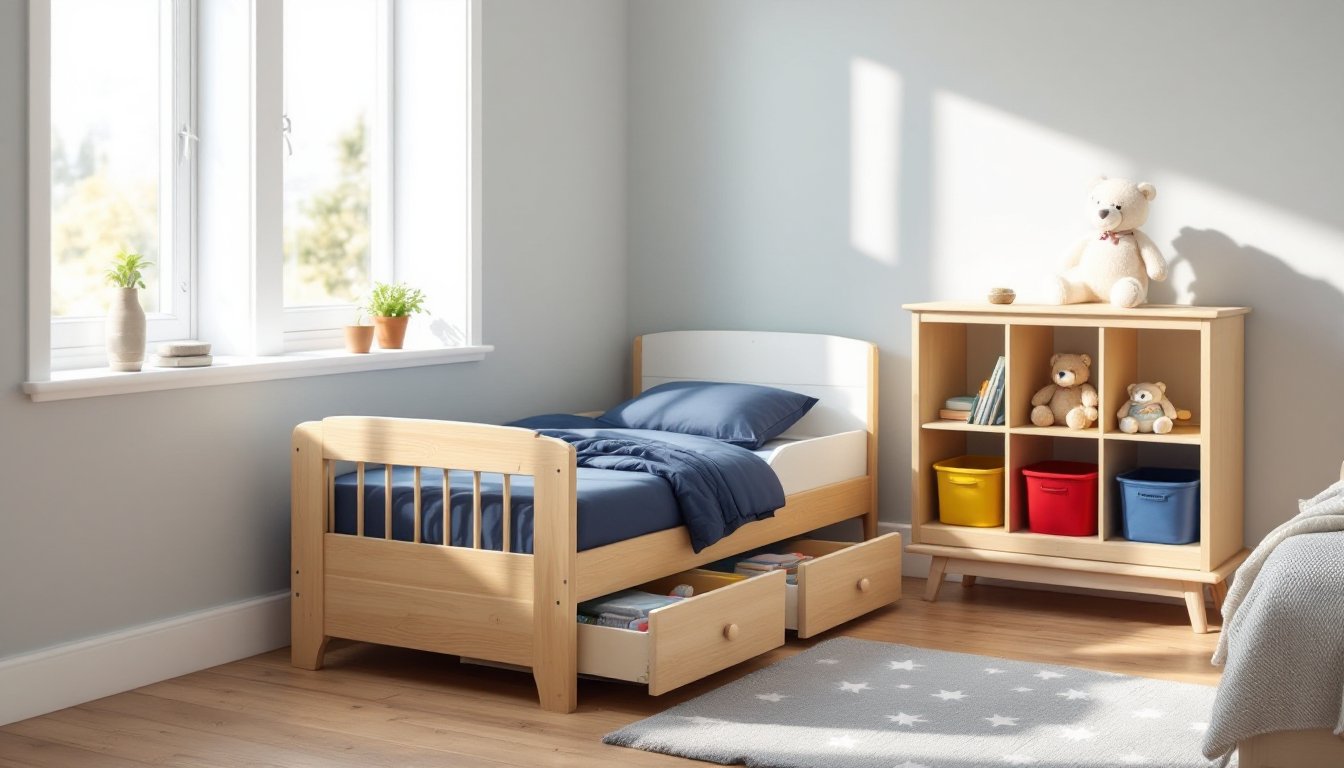
Transitioning a toddler from crib to “big kid” room is one of those milestone projects that blends excitement with practicality. Parents need furniture that keeps curious climbers safe, survives the chaos of daily toy avalanches, and doesn’t require remortgaging the house. A coordinated toddler bedroom furniture set simplifies the process, matching pieces designed to scale, built with rounded edges and tip-over protection, and often priced below buying everything separately. This guide walks through what actually matters when shopping for toddler boy bedroom sets in 2026, from safety certifications to layout planning, so the room works as hard as your two-year-old runs.
Table of Contents
ToggleKey Takeaways
- Toddler bedroom furniture sets boy options prioritize safety certifications (CPSC, ASTM F1427, JPMA) and tip-over protection with wall anchors, which have prevented countless injuries since 2000.
- Solid wood construction with rounded edges, soft-close drawers, and correct furniture scale (beds 10-14 inches high, dressers under 36 inches) outperforms cheaper particleboard alternatives in durability and safety.
- Anti-tip hardware anchored to wall studs is non-negotiable for all tall pieces over 24 inches—drywall anchors alone cannot support a climbing toddler’s weight.
- Open cubby storage units and forward-facing bookshelves encourage toddler independence better than closed cabinets, while themed elements through paint and hardware swaps offer flexibility as interests change from trucks to dinosaurs.
- Budget-conscious parents can coordinate neutral furniture sets with DIY customization using primer, stencils, and removable themed elements, avoiding character-specific designs that feel dated by preschool.
What to Look for in a Toddler Boy Bedroom Furniture Set
Size and scale matter more than aesthetics at this age. Toddler furniture sits lower to the ground than standard adult pieces, beds typically measure 10-14 inches from floor to mattress top, and dressers max out around 30-36 inches tall. This keeps climbing risks manageable and lets kids access drawers or shelves independently.
Material durability separates pieces that last until kindergarten from those that wobble by month three. Solid wood (pine, birch, hardwood) handles impacts better than particleboard or MDF, though engineered wood works fine for lighter-use items like bookshelves. Check joinery: corner blocks, dovetail joints, and metal brackets outlast glued butt joints. Finish quality matters, look for non-toxic, low-VOC paints or stains that meet ASTM F963 toy safety standards, since toddlers gnaw on furniture.
Anti-tip hardware should be included with every tall piece. Dressers and bookcases over 24 inches tall require wall anchors per current CPSC guidelines (updated after multiple tip-over fatalities). Most reputable manufacturers now bundle L-brackets or furniture straps: if not, skip that set. Anchoring to studs is non-negotiable, drywall anchors alone won’t hold a climbing toddler.
Drawer and door mechanisms need to withstand yanking. Soft-close drawer glides prevent pinched fingers and reduce slam damage. Avoid furniture with glass doors or sharp hardware, rounded knobs and recessed handles are safer than protruding metal pulls.
Assembly complexity varies wildly. Some sets arrive fully assembled (rare, usually custom or higher-end), most require 2-4 hours with an Allen wrench and a second pair of hands. Read reviews specifically mentioning assembly, poorly designed cam-lock systems or missing pre-drilled holes turn a Saturday project into a weekend ordeal.
Popular Furniture Pieces Included in Toddler Boy Sets
Toddler Beds and Bed Frames
Toddler beds use standard crib mattress dimensions (28″ × 52″), which saves money if you’re reusing the crib mattress. Frames come in three common styles: low platform beds with no side rails (12-18 months transition), beds with partial side rails (most popular for 18-36 months), and themed beds shaped like cars, trucks, or treehouses.
Low-profile platform beds work best for early transitioners, the 6-8 inch height minimizes fall risk. Partial side rails (usually one rail, 10-12 inches tall) prevent midnight rollovers without trapping the kid. Full-enclosure beds with tall headboards and footboards look appealing but can make sheet changes frustrating.
For DIY builders, projects like a vintage toddler bed offer plans that allow customization of height, rail style, and finish while keeping costs under $100 in lumber. Solid pine 1×4s and 2×4s handle the load: just sand all edges to 1/4-inch radius and use rounded carriage bolts instead of exposed screws.
Weight capacity on manufactured toddler beds typically maxes at 50 pounds, sufficient for a 4-year-old but not for wrestling matches or adult naptime supervision. Check the manufacturer’s rating before use.
Dressers, Toy Storage, and Organizational Solutions
Three-drawer dressers (roughly 30″ W × 18″ D × 30″ H) fit most toddler clothing needs without overwhelming floor space. Look for full-extension drawer glides so kids can actually see what’s in back. Dressers doubling as changing tables need a safety strap and a top surface at least 36 inches wide to accommodate a changing pad.
Open cubby storage units (4-, 6-, or 9-cube configurations) handle toys, books, and bins better than closed cabinets at this age. Toddlers do better with visual cues, seeing the bin of blocks beats opening three doors to find them. Fabric bins or wicker baskets soften corners and pull out easily: hard plastic bins last longer but crack when thrown.
Toy chests with slow-close lid hinges prevent finger injuries (ASTM F963 requires this feature on all new toy boxes). Avoid chests with latches, kids get trapped inside. Ventilation holes or gaps in the design are mandatory safety features.
Budget-conscious parents often turn to platforms like IKEA Hackers to modify Trofast or Kallax units with paint, custom bins, or added hardware for a coordinated look without the coordinated price tag. A quick varnish and some themed drawer pulls can unify mismatched pieces surprisingly well.
Bookcases and shelving should be no taller than 36 inches for toddler rooms. Forward-facing book displays (where covers show rather than spines) encourage independent reading choices, depth only needs to be 4-6 inches for picture books.
Top Theme and Style Ideas for Boy Toddler Bedrooms
Transportation themes (cars, trucks, trains, planes) dominate toddler boy furniture sets. These typically feature bold primary colors (red, blue, yellow) with vehicle-shaped beds or decals. Durability matters more than trend-chasing here, your kid’s obsession with garbage trucks will likely shift to dinosaurs by age four, so furniture with removable or paintable themed elements offers flexibility.
Nautical and adventure styles (navy, white, gray with anchor or compass motifs) age better than character-specific themes. A simple navy dresser works from toddler years through elementary school: a bed shaped like Lightning McQueen does not.
Woodland and animal themes (bears, foxes, forest greens, and browns) trend heavily in 2026, often in muted tones rather than bright cartoon palettes. These sets lean Scandinavian minimalist, clean lines, natural wood finishes, subtle wildlife illustrations rather than loud graphics.
Modern minimalist sets skip themes entirely: white, gray, or natural wood with simple hardware. This approach prioritizes longevity and lets bedding, rugs, and wall art carry the decorative load. Easier to update as interests change, though some kids find plain furniture boring.
DIY customization bridges the gap, buy neutral furniture, then add themed elements through paint, stencils, or hardware swaps. Online platforms like Instructables host step-by-step guides for adding racing stripes to dressers, building custom headboards shaped like fire trucks, or creating magnetic paint surfaces for interactive play. A weekend with primer, semi-gloss latex, and painter’s tape transforms a basic set into something personalized without the themed furniture markup.
Color psychology suggests cooler tones (blues, greens) promote calm, while reds and oranges energize, relevant if your toddler already runs hot. That said, most kids this age care more about whether the bed has wheels than whether the walls are cerulean or cobalt.
Safety Standards and Considerations When Choosing Furniture
All toddler furniture sold in the U.S. must meet CPSC (Consumer Product Safety Commission) regulations and ASTM F1427 standards for toddler beds, which mandate structural integrity testing, slat spacing (no more than 2-3/8 inches apart to prevent head entrapment), and non-toxic finishes. Check for a JPMA (Juvenile Products Manufacturers Association) certification sticker, it’s voluntary but indicates third-party testing.
Lead and phthalates remain concerns in imported furniture. Post-2008 regulations banned lead paint on children’s products, but enforcement varies. Stick with manufacturers listing CPSC compliance and Prop 65 (California) compliance if available. Solid wood with water-based finishes carries less risk than painted MDF from unknown suppliers.
Tip-over prevention killed 451 children between 2000-2022 per CPSC data. Anchor all dressers, bookcases, and TV stands to wall studs using the included hardware or aftermarket straps rated for 400+ pounds. Locate studs with a finder tool (around $10), drill pilot holes, and use 2-inch wood screws, not drywall anchors. Mount the anchor at the top third of the furniture for best leverage.
Corner guards and edge bumpers (foam or rubber) cushion inevitable collisions. Most toddler furniture has rounded corners already, but sharp-edged pieces need aftermarket guards. These stick on with adhesive: clean surfaces with rubbing alcohol first for better hold.
Hardware safety: Avoid furniture with small knobs or decorative elements a toddler could pry off and choke on. Recessed handles or cutout grips work better. Check that drawer stops prevent full removal, kids yank drawers out, then get hit when they fall.
Flame retardants: Some furniture foams contain chemical flame retardants linked to developmental issues. Look for products labeled “flame retardant-free” or using natural materials (wool, cotton, latex) that meet flammability standards without added chemicals. This matters more for upholstered pieces than solid wood furniture.
Ventilation and off-gassing: New furniture releases VOCs (volatile organic compounds) from finishes and adhesives. Unpack and air out pieces in a garage or well-ventilated room for 48-72 hours before bringing them into the bedroom, especially if the child has asthma or sensitivities.
Recalls: Check the CPSC recall database before buying used furniture or older models. Major recalls in recent years targeted dressers without tip-over protection and beds with faulty slats.
Conclusion
A well-chosen toddler bedroom set balances safety engineering with the reality that small humans treat furniture like playground equipment. Prioritize structural integrity, tip-over protection, and finishes that survive crayon attacks over theme trends that’ll feel dated by preschool graduation. Measure the room twice, anchor everything to studs, and budget time for assembly, most sets take longer to build than the box suggests. The right furniture grows with your kid’s independence without requiring a replacement every year.