
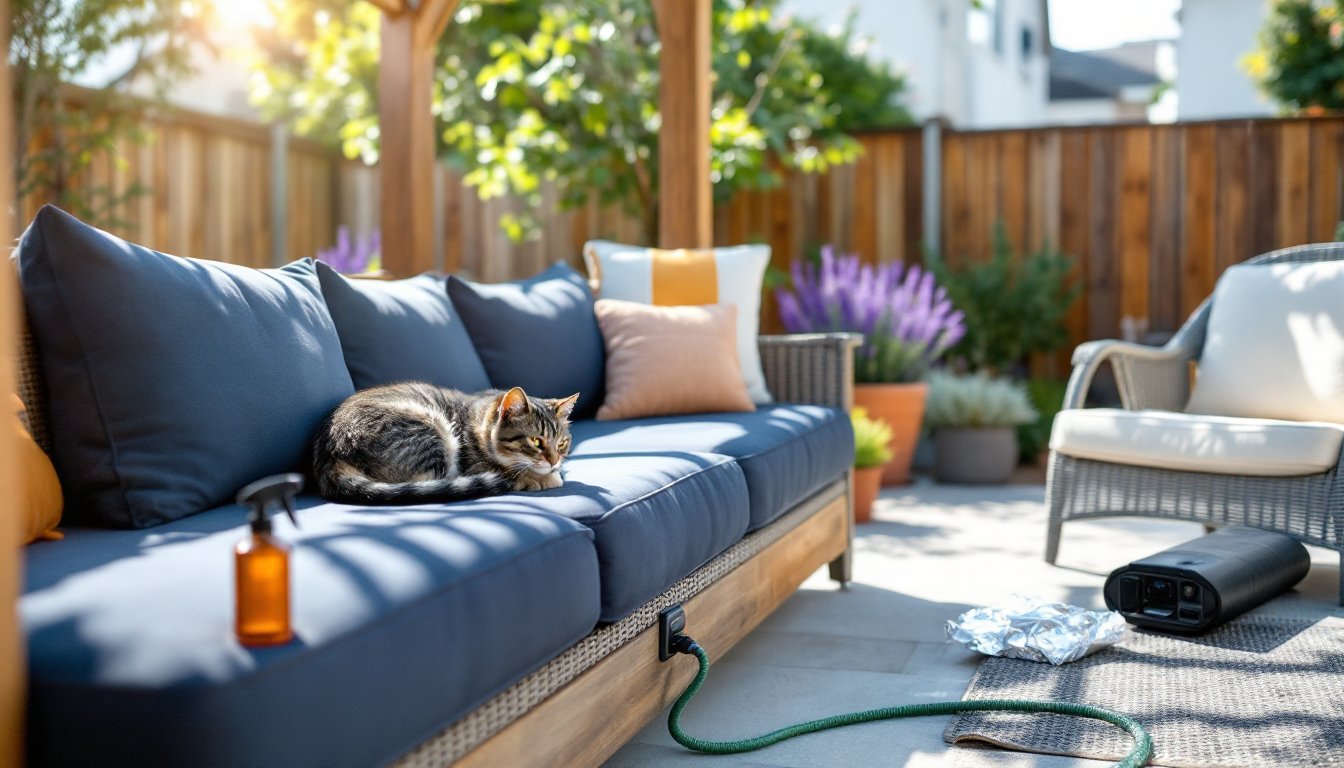
Outdoor furniture doesn’t stay pristine for long when neighborhood cats claim it as their new napping spot. From muddy paw prints on cushions to scratched wicker and fur embedded in every crevice, cats can turn a relaxing patio into a maintenance headache. Whether it’s a local stray or someone’s free-roaming pet, the problem is the same: convincing cats that outdoor seating isn’t theirs for the taking. The good news? There are practical, humane solutions that actually work without harming animals or requiring expensive equipment. Here’s how to reclaim outdoor furniture with a combination of physical deterrents, natural repellents, and smart design tweaks.
Table of Contents
ToggleKey Takeaways
- Motion-activated sprinklers and scat mats are highly effective physical deterrents that work immediately to keep cats off patio furniture without causing harm.
- Natural repellents like citrus sprays, essential oil blends, and commercial granular products require regular reapplication but offer safe, chemical-free ways to deter cats from outdoor seating.
- Understanding why cats are attracted to patio furniture—warmth, soft cushions, elevation, and shelter—helps you design targeted solutions that address root causes.
- Behavioral training through positive redirection, clicker training, and consistent removal can provide lasting results if the problem cat is a pet rather than a neighborhood stray.
- Fitted protective covers with secure straps and design modifications like thinner cushions or mesh seating make furniture less inviting while protecting it from damage.
- Creating appealing alternative spaces such as elevated cat beds, heated mats, and scratching posts in sunny spots redirects cats away from your patio furniture naturally.
Why Cats Are Attracted to Your Patio Furniture
Understanding why cats target patio furniture makes it easier to design effective countermeasures. Cats seek elevated, cushioned surfaces for several reasons, all rooted in instinct.
Warmth and sun exposure are major draws. Outdoor cushions, especially dark-colored ones, absorb and retain heat during the day. Cats are drawn to warm surfaces for thermoregulation, particularly in cooler months.
Soft, cushioned materials mimic the comfort of indoor furniture. Polyester-filled cushions provide the plush, yielding surface cats prefer over hard wood or metal. If the furniture is upholstered or has textured fabric, it also offers satisfying scratching opportunities.
Elevation and vantage points appeal to their territorial nature. Cats prefer high ground to monitor their surroundings for threats or prey. A patio chair or table gives them a secure perch with a clear sightline.
Scent marking is another factor. Once a cat has claimed a piece of furniture, it leaves behind pheromones from scent glands in its face and paws. Other cats detect these markers and may follow suit, compounding the problem.
Finally, outdoor furniture often sits in sheltered areas like covered patios or under eaves, offering protection from rain and wind. This combination of comfort, safety, and strategic positioning makes patio furniture irresistible to cats.
Physical Barriers and Deterrents That Actually Work
Physical deterrents create immediate, tangible obstacles that make furniture uncomfortable or inaccessible for cats. These solutions require no training and work on day one.
Motion-activated sprinklers are among the most effective tools. Units like the Orbit Yard Enforcer detect movement within a 35-foot range and release a short burst of water. Cats quickly learn to avoid the area. Position the sprinkler to cover furniture zones without soaking human traffic paths. Note that these require a garden hose hookup and seasonal winterization in cold climates.
Scat mats deliver a mild static pulse when stepped on. These battery-operated mats come in modular sizes (typically 12″ x 48″) and can be laid across chair seats or table surfaces. The sensation is harmless but unpleasant enough to discourage repeat visits. They’re weatherproof but should be stored indoors during heavy rain or snow to extend battery life.
Aluminum foil or plastic carpet runners offer low-cost alternatives. Cats dislike the texture and sound of foil underfoot. Laying sheets across cushions works temporarily, but wind and UV exposure degrade foil quickly. Plastic carpet runners with nub-side-up are more durable. Cut them to fit seat dimensions and secure with outdoor adhesive strips if needed.
Upside-down carpet tack strips can be placed on armrests or flat surfaces where cats typically land. The metal tacks don’t injure paws but create an unwelcoming surface. This method is best for furniture not regularly used by people, as tacks can snag clothing.
Netting or chicken wire stretched over furniture when not in use provides a physical barrier. Quarter-inch mesh poultry netting is lightweight and easy to drape. Secure it with bungee cords or zip ties to prevent cats from burrowing underneath. This is a practical solution for seasonal furniture or during extended absences.
Natural Repellents to Keep Cats Away Safely
Natural repellents leverage scents cats find offensive without resorting to harsh chemicals. These solutions are safe for plants, pets, and humans but require regular reapplication.
Citrus-based sprays are highly effective. Cats have a strong aversion to citrus oils. Mix fresh lemon or orange juice with water in a 1:3 ratio and spray directly onto cushions and furniture frames. Reapply after rain or every 3-4 days. Commercial citrus sprays like Nature’s Miracle also work well and often include additional deterrents like rosemary oil.
Essential oil blends can be mixed at home. Combine 10-15 drops each of eucalyptus, lavender, and peppermint oil with 1 cup of water in a spray bottle. Shake well before each use and mist furniture surfaces. Avoid applying to fabric that may stain: test a small area first. These oils dissipate quickly in direct sun, so plan to reapply every 2-3 days. According to experts at Better Homes & Gardens, many homeowners also use these blends in garden beds to deter pests.
Coffee grounds or cayenne pepper scattered around furniture legs can create a scent barrier. Cats dislike the smell of both. Spread a thin layer on the ground beneath chairs or along the patio perimeter. Rain will wash these away, so they’re better suited for covered areas or dry climates.
Vinegar solutions work but have a strong odor humans may also find unpleasant. Mix equal parts white vinegar and water and spray around furniture edges. The smell fades as it dries but lingers enough to deter cats.
Commercial granular repellents like Shake-Away or Repels-All contain predator urine (coyote or fox) or plant-based oils. Sprinkle these around the patio perimeter or in planting beds adjacent to furniture. Effective coverage is about 1 pound per 300 square feet, and they last 30-60 days depending on weather.
Training and Behavioral Solutions for Long-Term Success
If the problem cat is a pet rather than a neighborhood stray, training offers a lasting solution. Behavioral modification takes time but addresses the root cause.
Positive redirection involves offering an acceptable alternative every time the cat approaches furniture. When the cat jumps onto a chair, immediately pick it up (gently) and place it on a designated scratching post or cat bed nearby. Reward compliance with treats or affection. Consistency is critical, everyone in the household must follow the same protocol.
Clicker training can reinforce boundaries. Each time the cat avoids furniture or uses an approved surface, click and reward. Over 2-3 weeks, cats begin to associate staying off furniture with positive outcomes. This method works best with food-motivated cats.
Boundary training with verbal cues teaches cats to respond to commands like “off” or “no.” Pair the verbal cue with a gentle physical redirect. Never yell or use physical punishment, as this damages trust and can increase stress-related behaviors.
Consistent removal is simple but effective. Every single time the cat is found on furniture, calmly remove it without drama or attention. Cats often seek furniture for the reaction it provokes. Removing them quietly eliminates that reward.
Scheduled outdoor time can reduce furniture use if the cat is indoors most of the day. Supervise outdoor sessions and direct the cat to approved lounging areas. Over time, the cat learns where it’s allowed to relax outside.
For households with multiple cats, one may be the instigator while others follow. Identifying and focusing training on the lead cat often solves the issue for the group.
Protective Covers and Furniture Modifications
When deterrents and training aren’t practical, protective covers and design modifications can shield furniture from damage while allowing continued use.
Fitted outdoor furniture covers made from solution-dyed acrylic or polyester are the first line of defense. Look for covers with drawstring hems or buckle straps to prevent cats from burrowing underneath. Brands like Classic Accessories or Covermates offer UV-resistant, waterproof options in custom sizes. Covers work best when furniture isn’t in use, so they’re ideal for end-of-day or seasonal storage.
Vinyl or canvas slipcovers can be left in place even during use. These washable covers protect cushions from fur, dirt, and claw snags. Choose covers with non-slip backing or elastic edges to keep them secure. They’re available in standard chair and sofa dimensions or can be custom-sewn from outdoor upholstery fabric.
Double-sided tape applied to armrests or seat edges creates a sticky barrier cats hate. Outdoor-rated tape like Scotch Exterior Mounting Tape withstands moisture and temperature swings. Replace every 4-6 weeks as adhesive degrades.
Textured furniture pads made from sisal, jute, or rough plastics discourage lounging. These pads are designed for scratching but can be repurposed as seat covers. The abrasive texture is unappealing for napping but won’t harm paws.
Furniture design changes can also help. Swap plush cushions for thinner, firmer pads (1-2 inches instead of 4-5 inches). Cats prefer deep, soft surfaces: reducing cushion loft makes furniture less inviting. Similarly, choosing furniture with slatted or mesh seats instead of solid upholstery eliminates the soft surface cats crave. Metal or teak frames with minimal padding are inherently less attractive to cats than fully cushioned wicker or rattan.
Creating Alternative Spaces Cats Will Prefer
Providing an appealing alternative gives cats a reason to avoid furniture. The goal is to offer something more comfortable, warm, and elevated than the patio chairs.
Outdoor cat shelters or perches designed specifically for feline use are highly effective. A simple wooden platform mounted 3-4 feet off the ground with a cushioned mat mimics the elevation and comfort of patio furniture. Place it in a sunny spot near, but not on, the patio. Cats gravitate toward the dedicated space, especially if it’s introduced with catnip or treats.
Heated outdoor beds are particularly useful in cooler climates. Low-wattage heated mats (typically 4-6 watts) provide gentle warmth without high energy costs. Position these in a sheltered area like a garden shed, under a deck, or inside a weatherproof enclosure. Cats will choose a warm bed over unheated furniture every time.
Scratching posts and climbing trees satisfy territorial and physical needs. A sturdy sisal-wrapped post or a multi-level cat tree placed near the patio gives cats an outlet for scratching and climbing. Outdoor-rated posts are available, or DIY versions can be built from 4×4 pressure-treated posts wrapped in marine-grade sisal rope. According to tips from The Spruce, outdoor cat furniture should be anchored securely to prevent tipping.
Sunning platforms or garden benches repurposed as cat zones work well. An old wooden bench placed in a sunny corner with a fleece pad or outdoor rug becomes an instant cat magnet. If it’s elevated and warm, cats will claim it.
Catnip or silver vine planted near alternative spaces increases their appeal. Both plants are safe and highly attractive to most cats. Rubbing fresh leaves on new perches or beds encourages exploration.
In multi-cat environments, provide multiple alternative spaces to reduce competition. Ideas shared on Gardenista include integrating cat-friendly elements into garden design, like low stone walls topped with cushions or vine-covered pergolas with hanging hammocks.
Conclusion
Keeping cats off patio furniture isn’t about winning a battle, it’s about making outdoor spaces less appealing than the alternatives. Combining physical barriers like motion sprinklers or scat mats with natural repellents and strategic redirection gives homeowners multiple tools to address the issue. For long-term success, consider adding cat-friendly zones that satisfy their need for warmth, elevation, and comfort. With consistent effort and a mix of deterrents, reclaiming fur-free furniture is entirely achievable.