
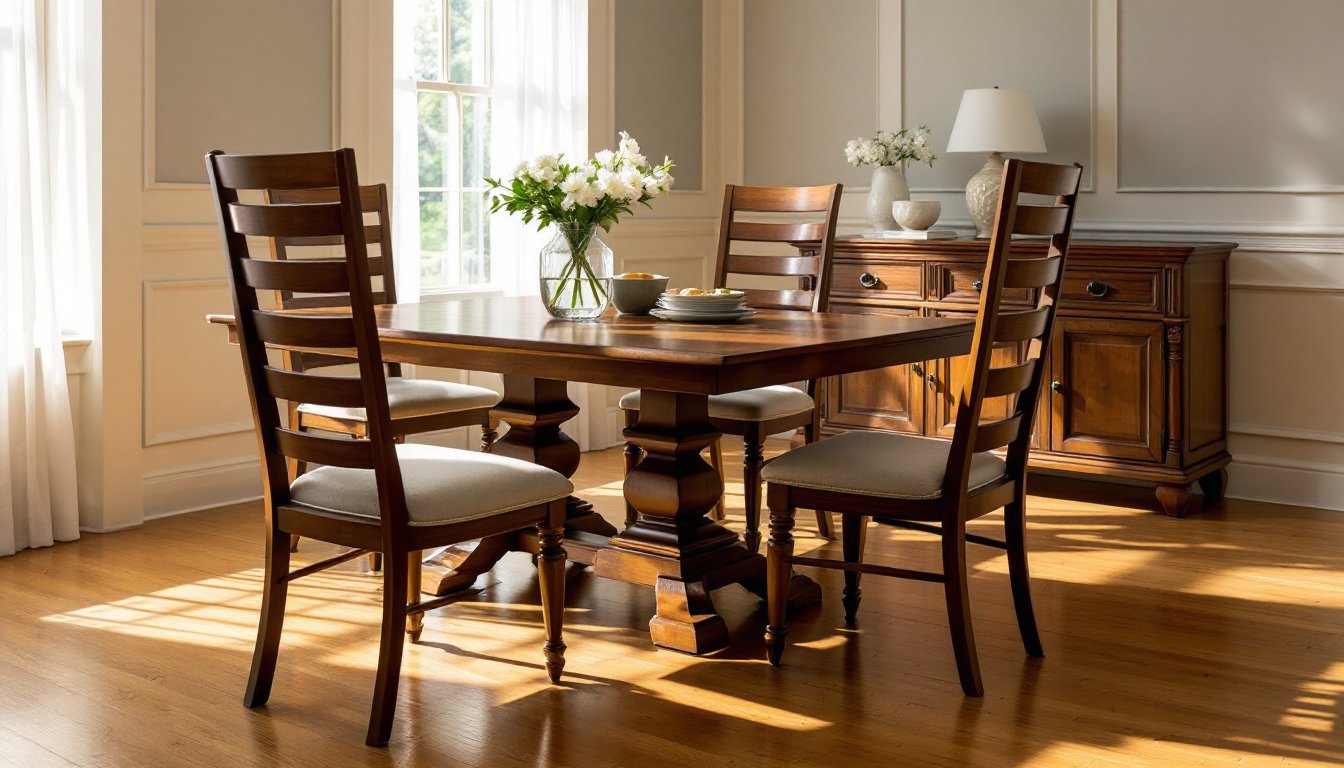
Transforming a dining room from functional to elegant doesn’t require a designer’s budget or architectural expertise. It requires understanding what makes furniture refined, proportion, material quality, and how pieces relate to each other in the space. This guide walks through the specific furniture decisions that create a sophisticated dining room, from choosing the right table dimensions to selecting storage pieces that add function without clutter. Whether working with a formal dining room or a multi-purpose space, these practical considerations help homeowners make furniture choices that deliver lasting elegance.
Table of Contents
ToggleKey Takeaways
- Elegant dining room furniture is defined by clean lines, quality materials with visible craftsmanship (like dovetail joinery), and intentional design choices rather than budget alone.
- A properly sized dining table requires 36-48 inches of clearance between the table edge and walls, with minimum dimensions of 36 x 72 inches for comfortable six-person seating.
- Solid hardwood tables ($800-$3,000+) offer heirloom quality, while engineered wood with veneers ($400-$1,200) resists warping better and can be more practical for large tabletops.
- Coordinate dining room furniture through consistent finish tones and design era rather than matching sets; two upholstered host chairs paired with simple side chairs creates elegance without appearing generic.
- Storage pieces like buffets and sideboards should match the table’s finish tone within the same color temperature and not exceed the table’s width for proper visual balance.
- Vary furniture heights (adding a 72-84 inch china cabinet alongside standard 30-36 inch pieces) creates visual rhythm and prevents the room from feeling flat.
What Defines Elegant Dining Room Furniture?
Elegant furniture isn’t just expensive furniture, it’s about deliberate design choices that create visual cohesion and timeless appeal. The defining characteristics include clean lines that don’t date quickly, proportions that suit the room rather than overwhelming it, and quality materials with visible craftsmanship.
Look for furniture with details like dovetail joinery on drawers, mortise-and-tenon construction on chairs, and finishes that show wood grain rather than hide it. Veneers aren’t necessarily a downgrade, high-quality veneers over engineered wood cores can be more stable than solid wood in fluctuating humidity, particularly for large tabletops.
Elegance also means restraint. Avoid over-ornamentation, mismatched finish levels (like pairing high-gloss with distressed pieces), and trendy colors that won’t age well. Neutral tones, walnut, oak, black, white, or soft grays, provide flexibility as decor evolves. The furniture should feel intentional, not like a collection of sale finds that happen to occupy the same room.
Choosing the Perfect Dining Table for Elegance
The dining table anchors the entire room, so getting the size and shape right is non-negotiable. Allow 36-48 inches between the table edge and walls or other furniture, this gives diners room to pull out chairs and servers space to move around. For a table that seats six comfortably, plan on a minimum 36 x 72 inches for rectangular tables.
Shape matters for flow. Rectangular tables work in most spaces and maximize seating. Round tables (48-60 inches diameter for four to six people) encourage conversation and work well in square rooms. Oval tables offer a middle ground but need more clearance on the ends for the curved edges.
Pedestal bases provide more legroom than four-legged designs and look less cluttered, but verify the base is substantial enough to prevent tipping, check manufacturer specs for weight distribution. Trestle tables offer a traditional elegance but can interfere with chair placement at the ends. If extension capability matters, inspect the mechanism: butterfly leaves store within the table, while drop-in leaves require storage space but often create a more seamless look when extended.
Material and Finish Considerations
Solid hardwood (oak, maple, walnut, cherry) remains the standard for heirloom-quality tables. Expect to pay $800-$3,000+ depending on size, wood species, and construction quality, prices vary widely by region and current lumber markets.
Engineered wood with veneer costs less ($400-$1,200) and resists warping better than solid wood. Quality veneers are typically 1/16 to 1/8 inch thick and can be refinished once if damaged. Avoid paper-thin photo veneers that can’t handle moisture or heat.
Glass tops (usually 3/8 to 1/2 inch tempered glass) create an airy feel in smaller rooms but show fingerprints and require regular cleaning. Ensure the base is stable, glass adds 100-150 pounds for a 72-inch table.
Stone tops (marble, granite, quartz) deliver luxury but are heavy (200+ pounds for a standard dining table) and may require structural floor support verification in upper-story rooms or older homes. They’re also porous (marble especially) and need sealing to prevent staining.
Finish choices affect longevity. Oil-based polyurethane provides durable protection but yellows slightly over time. Water-based poly stays clearer but may need more coats. Lacquer finishes offer a smooth, elegant look but scratch more easily. Wax or oil finishes require regular maintenance but are easiest to repair locally.
Selecting Dining Chairs That Elevate Your Space
Chairs make or break a dining room’s comfort and elegance. Plan for 24 inches of linear table space per person, crowding chairs closer makes dining awkward. Seat height should be 10-12 inches lower than the table surface: standard tables at 29-30 inches pair with 18-inch seat heights.
Upholstered seats and backs add comfort for longer meals but require more maintenance, look for removable, washable covers or performance fabrics (like solution-dyed acrylics or treated polyesters) that resist stains. Leather develops patina but can crack without conditioning: top-grain leather wears better than bonded leather, which is essentially leather scraps glued to fabric.
Wood or metal chairs suit high-traffic homes and are easier to clean, though they’re less comfortable for extended sitting. Consider adding seat cushions with ties.
Armchairs at the table heads add formality, but verify they fit under the table apron (the horizontal frame piece). Measure apron-to-floor clearance before buying, many armchairs need 26-27 inches, while standard aprons sit around 24-25 inches from the floor.
Mixing chair styles can work elegantly: pair two upholstered host chairs at the ends with simpler side chairs, keeping consistent finish tones. This approach, often featured in design portfolios, adds visual interest without chaos. Avoid mixing more than two chair styles, it reads as indecisive, not eclectic.
Storage and Display Pieces for a Refined Dining Room
Storage furniture should serve function first, elegance second, but the best pieces do both. Buffets and sideboards (typically 60-72 inches long, 34-36 inches tall) provide serving surfaces and concealed storage for linens, flatware, and serveware. Look for adjustable interior shelving and soft-close drawer glides, both indicate quality construction.
China cabinets and hutches display fine dishware while protecting it from dust. Glass shelves (usually 1/4-inch tempered) showcase items better than wood but add cost. Interior lighting, puck lights or LED strips, elevates the display but requires access to power, either through an outlet or hardwiring (which may need an electrician if not DIY-comfortable with electrical work).
Credenzas offer lower-profile storage (around 30-32 inches tall) and work well in modern or mid-century styled rooms. They double as bar storage or serving stations.
When selecting storage pieces, match the table’s finish tone closely, not necessarily the exact species, but within the same warm/cool temperature. A honey-toned oak table clashes with a cool gray-washed buffet. Interior designers often recommend keeping furniture finishes within the same color family to maintain visual harmony.
Scale matters: a 48-inch round table looks orphaned next to a massive 84-inch buffet. As a general rule, dining storage should be no wider than the table and placed on a wall that allows at least 6-8 inches of clearance on each side for visual balance.
Coordinating Your Elegant Dining Room Furniture
Matching furniture sets sound convenient, but often read as showroom generic rather than curated. Instead, coordinate through consistent finish tones and design era, pair mid-century modern chairs with a clean-lined credenza, or traditional Windsor chairs with a farmhouse trestle table.
Metal accents unify disparate pieces. If chair legs feature brushed nickel or brass ferrules, echo that in cabinet hardware, light fixtures, or even picture frames. Keep metal finishes to two types maximum, mixing chrome, brass, copper, and black iron in one room looks chaotic.
Legs and bases create visual weight. Tapered legs feel lighter than chunky turned legs: hairpin or angled legs suit modern aesthetics: cabriole or carved legs reinforce traditional elegance. Mixing leg styles works if the finish and scale match, a tapered-leg table can pair with ladder-back chairs if both are the same wood tone.
Consider furniture height variation. A room with all pieces at 30-36 inches (table, buffet, hutch base) feels flat. Adding a taller china cabinet (72-84 inches) or lower credenza (30 inches) creates visual rhythm.
Transforming your overall space starts with furniture that shares a common thread, whether that’s era, material, color temperature, or line style, rather than identical catalog numbers. Elegant rooms feel collected over time, not purchased in one transaction.
Conclusion
Elegant dining room furniture comes down to intentional choices: right-sized tables, quality materials that show their craftsmanship, chairs that balance comfort with style, and storage that serves without overwhelming. Coordination through finish, era, and scale creates cohesion without the cookie-cutter feel of matched sets. Take measurements seriously, verify construction quality, and choose pieces that work with the room’s architecture rather than fighting it.