
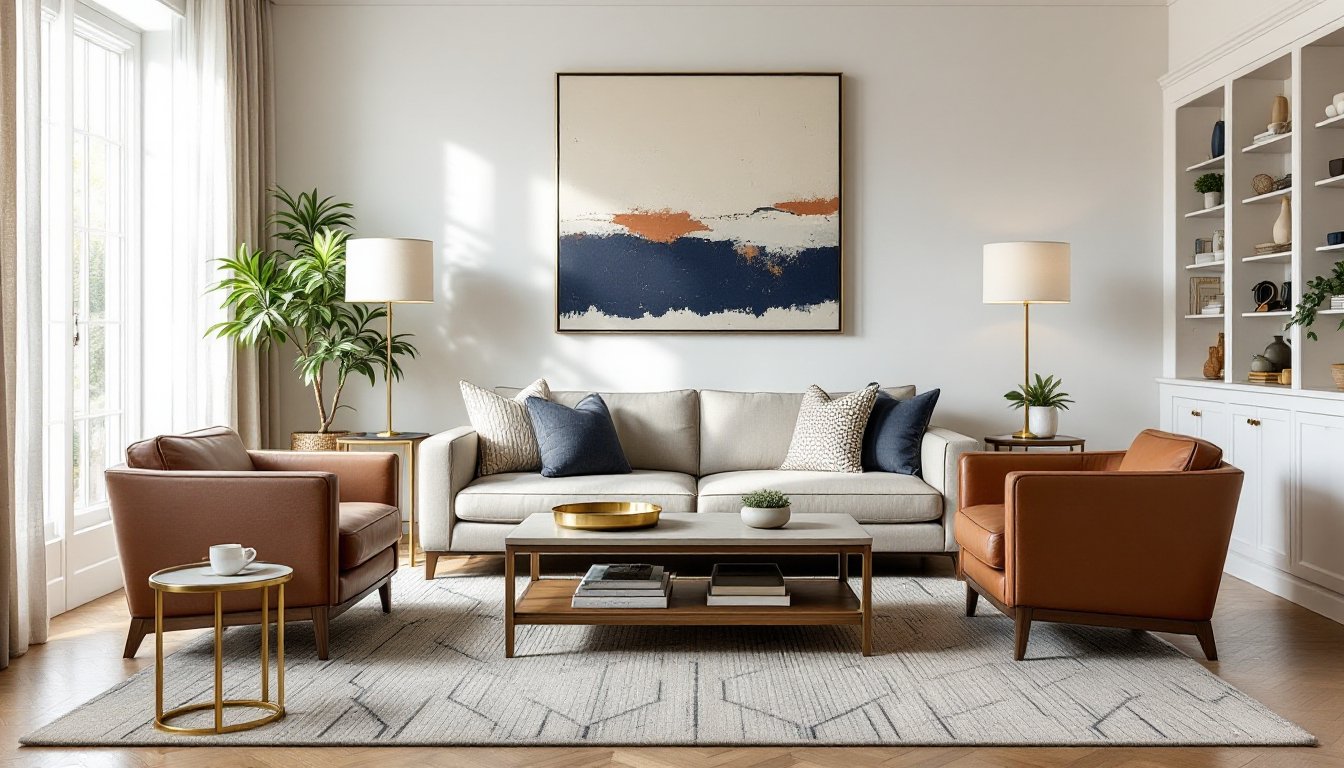
Elegance isn’t something you stumble upon at a clearance sale. It’s the result of deliberate choices, selecting pieces that balance proportion, material quality, and restraint. Whether you’re working with a historic Victorian or a modern open-concept space, the right furniture can elevate your living room from functional to refined. This guide walks through the essentials: what defines elegance in furniture design, which pieces anchor a sophisticated room, and how materials, colors, and layout decisions create cohesion. No fluff, no mood boards without measurements, just practical advice for building a living room that looks intentional and feels timeless.
Table of Contents
ToggleKey Takeaways
- Elegant living room furniture prioritizes clean lines, balanced proportions, and quality craftsmanship over trendy designs or excessive ornamentation.
- Choose a sofa with a hardwood frame, high-density foam cushions, and seat depth between 20–24 inches; length should range from 84–96 inches for most living rooms.
- Select natural materials such as full-grain leather, wool, linen, and solid hardwood to communicate quality and create a timeless, cohesive aesthetic.
- Limit your color palette to three to five colors, including neutrals; layer tones within a single color family and repeat accent colors throughout the room to add depth.
- Arrange elegant living room furniture to encourage conversation by positioning seating in U-shaped or L-shaped groupings with no more than 8–10 feet between seats.
- Invest in layered lighting with ambient, task, and accent sources rather than relying on a single overhead fixture to enhance elegance and functionality.
What Defines Elegant Living Room Furniture?
Elegant furniture shares a few non-negotiable traits: clean lines, balanced proportions, and quality craftsmanship. It doesn’t shout for attention with excessive ornamentation or trendy gimmicks. Instead, it relies on subtle details, turned legs, beveled edges, tufted upholstery, or book-matched veneers, that reward a closer look.
Proportion matters more than size. A massive sectional can feel elegant if its seat depth, arm height, and backrest align with the room’s scale. Conversely, a dainty chair with spindly legs might look out of place in a large space with tall ceilings. Traditional furniture often features symmetry: matching armchairs flanking a sofa, or pairs of end tables. Mid-century modern pieces lean toward asymmetry but maintain balance through repetition of shapes or materials.
Craftsmanship separates elegant furniture from budget alternatives. Look for solid hardwood frames (maple, oak, walnut) rather than particleboard or softwood. Joinery should be mortise-and-tenon or dovetail, not staples. Upholstery should sit taut without puckering, with double-welted seams on cushions. Hand-tied eight-way spring systems in sofas and chairs provide superior support compared to sinuous (zigzag) springs, though they add cost.
Finally, elegant furniture avoids fleeting trends. That doesn’t mean it’s boring, it means the design has staying power. A Chesterfield sofa, a slipper chair, or a parsons table will still look appropriate in a decade, unlike a piece designed to match this season’s color of the year.
Essential Furniture Pieces for an Elegant Living Room
Statement Sofas and Seating
The sofa is the room’s anchor, choose poorly here, and the rest of the space will feel off. For elegance, prioritize a sofa with a hardwood frame and high-density foam cushions (minimum 1.8 lb/ft³ density for seats). Avoid oversized recliners or modular sectionals with cup holders: those belong in a media room, not a formal living space.
Length and depth depend on room dimensions, but an 84- to 96-inch sofa fits most living rooms without overwhelming them. Seat depth should be 20 to 24 inches, deep enough for comfort but not so deep that shorter users can’t sit with their backs supported. Arm styles matter: track arms (straight, boxy) suit modern spaces, while rolled or English arms lean traditional.
Upholstery choices include leather, linen, velvet, or high-performance fabrics. Full-grain leather develops a patina over time and suits both classic and contemporary rooms. Belgian linen offers texture and breathability but wrinkles easily, embrace it or choose a linen-cotton blend. Velvet adds instant luxury but shows wear on high-traffic seats: reserve it for accent pieces or low-use rooms. Understanding how different sectional configurations work in various layouts can help inform your sofa choice, especially in larger spaces.
Color choices here set the tone. Neutrals, ivory, greige, charcoal, navy, allow flexibility with accessories. A bolder sofa (emerald green, burnt sienna) can work if the rest of the room stays restrained.
Accent Chairs and Ottomans
Accent chairs provide visual interest and extra seating without duplicating the sofa. Pair a low-slung mid-century lounge chair with a traditional sofa, or add wingback chairs to a modern sectional. Mixing eras keeps the room from looking like a showroom floor.
Scale and placement matter. An accent chair should relate to the sofa in height and depth, if the sofa has a 36-inch seat height and deep cushions, a delicate side chair with a 30-inch height will look mismatched. Place chairs to create conversation zones: angled toward the sofa, not lined up against walls.
Ottomans serve triple duty: footrest, extra seating, and coffee table (add a tray). A tufted ottoman in leather or linen fits most elegant schemes. For flexible seating, choose one on casters or a nesting set of smaller ottomans. Avoid ottomans that match the sofa exactly, contrast in texture or tone adds depth.
Choosing the Right Materials and Finishes
Materials communicate quality faster than any other design element. Elegant living rooms favor natural materials over synthetics: hardwood, stone, metal, leather, wool, linen.
Wood finishes fall into a few camps. Dark walnut or espresso stains add formality and pair well with jewel tones. Medium oak or cherry finishes suit traditional or transitional styles. Light ash or whitewashed oak works in Scandinavian or coastal-inspired rooms. Avoid overly glossy lacquered finishes: they read dated. Instead, choose hand-rubbed oil or matte polyurethane for a subtle sheen.
Metal accents, legs, handles, lamp bases, should match across the room. Mixing brushed brass hardware with polished nickel legs creates visual clutter. Stick to one or two metal finishes. Brass and bronze add warmth: nickel and chrome lean cooler. Matte black is neutral and modern but can feel heavy if overused.
For upholstery, consider durability alongside aesthetics. Leather (top-grain or full-grain) resists stains and ages well: avoid bonded leather, which peels. Wool and wool blends resist pilling and hold dye well. Performance fabrics (treated polyester blends) mimic natural fibers and repel spills, useful for households with kids or pets, though some lack the hand-feel of linen or cotton.
Glass and stone add elegance in moderation. A marble or travertine coffee table introduces natural veining and cool tones. Designers often incorporate principles from minimalist living rooms when selecting materials to avoid visual clutter. Tempered glass tabletops keep sightlines open in smaller rooms but require constant cleaning. Use stone or glass as accent materials, not the dominant surface, all-glass furniture can feel cold and impersonal.
Color Palettes That Elevate Elegance
Elegant color palettes lean toward restraint and cohesion. That doesn’t mean monochrome, it means intentional contrast and a limited palette (three to five colors, including neutrals).
Neutral bases provide flexibility. Warm neutrals (beige, taupe, greige) pair with brass, walnut, and warm-toned textiles. Cool neutrals (gray, charcoal, soft white) complement chrome, marble, and cooler fabrics. Many homeowners apply similar color principles when selecting refined furniture pieces to ensure cohesion across rooms. Black and white create high contrast but can feel stark: soften with off-white (ivory, cream) and charcoal instead of pure shades.
Accent colors should appear in multiple places, throw pillows, artwork, a single chair, not just one isolated object. Jewel tones (emerald, sapphire, ruby) add richness without feeling garish. Muted earth tones (terracotta, olive, ochre) work in transitional or bohemian-leaning spaces. Avoid overly saturated primaries: they skew playful rather than refined.
Layering tones within a single color family adds depth. A navy sofa, slate-blue pillows, and a powder-blue throw create visual interest without introducing new hues. The same applies to neutrals: layer cream, linen, and taupe for warmth, or dove gray, charcoal, and white for a cooler palette.
When in doubt, test paint samples and fabric swatches in the actual room under natural and artificial light. Colors shift dramatically between a sunny afternoon and evening lamplight. What reads as warm beige at noon might look pink under incandescent bulbs.
Layout and Arrangement Tips for Elegant Spaces
Elegant rooms feel intentional, not accidental. Layout starts with traffic flow, people shouldn’t have to squeeze behind a sofa or step over an ottoman to cross the room. Aim for 30 to 36 inches of clearance in walkways.
Furniture groupings should encourage conversation. Arrange seating in a U-shape or L-shape, with all seats no more than 8 to 10 feet apart. If the room is large, create multiple zones: a seating area near the fireplace and a reading nook by the window. Use an area rug to define each zone, make sure the rug is large enough that at least the front legs of all furniture pieces sit on it. A 9×12-foot rug suits most standard living rooms: smaller rugs (5×7) work under coffee tables but shouldn’t anchor a full seating group.
Coffee table placement matters. Leave 16 to 18 inches between the table edge and sofa: closer feels cramped, farther makes reaching awkward. The table height should match or sit slightly lower than the sofa seat, typically 16 to 18 inches. Resources like Architectural Digest often feature professional layouts that demonstrate these spatial relationships in high-end settings.
Symmetry vs. asymmetry: Traditional elegant rooms favor symmetry (matching table lamps on identical end tables). Modern elegant rooms embrace asymmetry but maintain visual balance, a tall floor lamp on one side balanced by a large plant or sculpture on the other. Exploring design ideas from sources like Home Bunch can provide practical examples of both approaches.
Wall anchoring: Avoid pushing all furniture against walls, which creates a “bowling alley” effect. Float the sofa a few feet from the wall if space allows. Anchor large pieces to architectural features: center a sofa under a window or opposite a fireplace, or position a console table behind a floating sofa.
Finally, lighting layers complete the layout. Combine ambient lighting (recessed cans, chandeliers), task lighting (reading lamps, picture lights), and accent lighting (sconces, LED strips under shelves). Dimmer switches on all circuits allow flexibility. Avoid relying on a single overhead fixture, it flattens the space and creates harsh shadows. For rooms that incorporate entertaining areas, principles from bar furniture arrangements can inform how to balance function and style.
Measure twice, arrange once. Sketch the room to scale on graph paper (¼ inch = 1 foot) or use a free online room planner. Cut out scaled furniture shapes and test layouts before moving a single piece. It’s faster than shoving a sofa around and discovering it blocks the hallway. Those seeking tailored solutions might also consider how custom furniture principles apply to living room pieces for perfect-fit elegance.
Elegance in a living room isn’t about spending a fortune, it’s about making deliberate choices with materials, proportion, and layout. Start with quality foundational pieces, layer in texture and color thoughtfully, and respect the room’s architecture. Skip the trends, trust your measurements, and don’t be afraid to leave some space empty. For more furniture inspiration and ideas, visit the furniture section for additional guidance. A well-planned elegant living room rewards you every time you walk into it.